

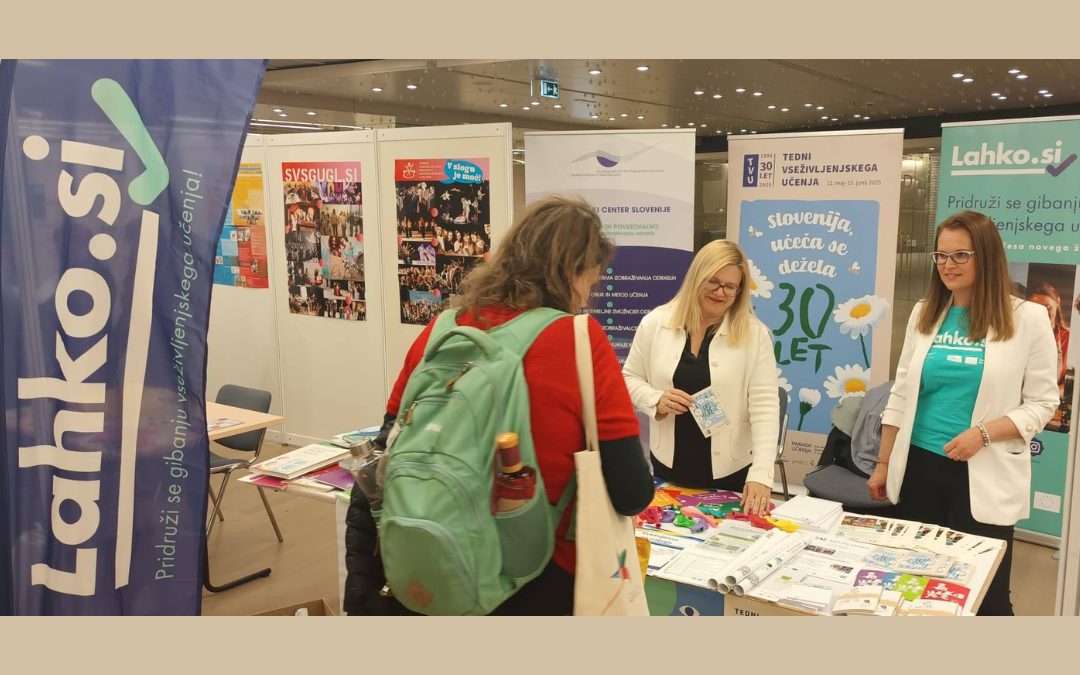
At Slovenia’s central professional event in the field of arts and cultural education, we explored new ways to make cultural content more accessible and inclusive by strengthening links between culture and education. The event, held on 1 April at Cankarjev dom, was intended for professionals working in education and culture, students and the wider public.
The full-day programme offered a diverse range of content across several venues. This year’s central theme was accessibility, with particular emphasis on including diverse groups in cultural life and bringing culture closer to everyone.
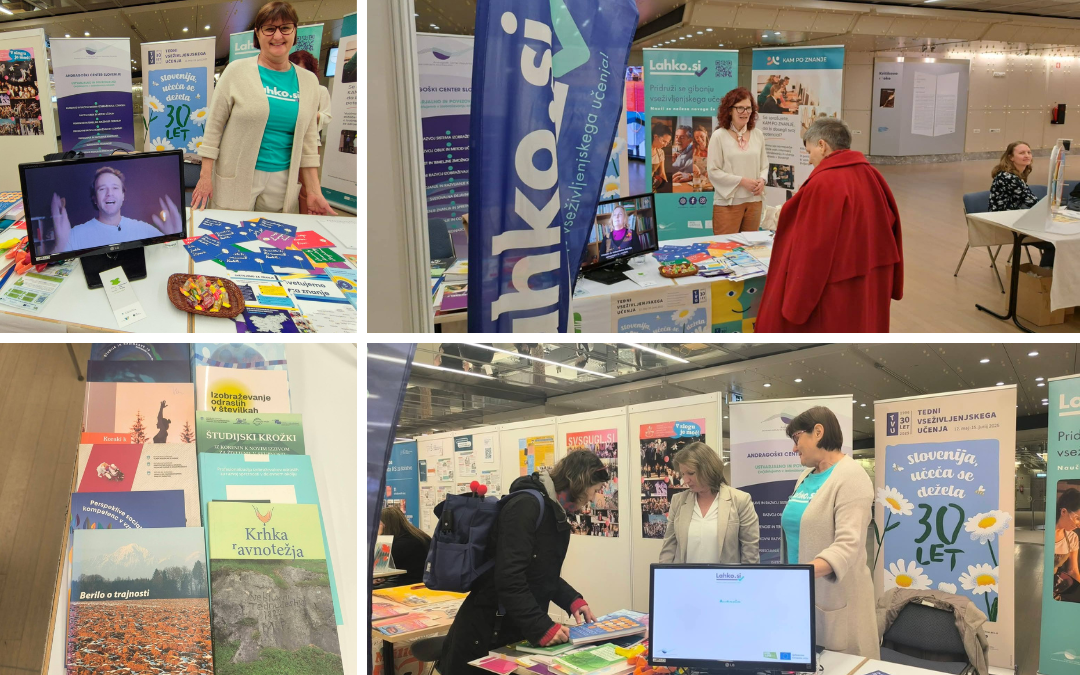
At the exhibition stand in the first foyer, colleagues from the Slovenian Institute for Adult Education (SIAE) highlighted the many opportunities available in adult education. Throughout the day, organisers of educational programmes, teachers, educators, retirees, young parents and all lifelong learning enthusiasts were offered information and opportunities to exchange experiences.
We presented a range of SIAE activities, including Lifelong Learning Weeks (LLW) 2026, the Lahko.si campaign within the Awareness-raising for Lifelong Learning project, the ABC of Environmental Learning, the Opazujmo app (in Slovenian) for developing observation skills, National Reading Day, the Where to Get Knowledge platform and Adult Education Guidance Centres. Visitors were also invited to explore the virtual Self-Directed Learning Centres (SSU) and received complimentary books.
We also organised a round table discussion titled Culture and Education Hand in Hand for the Promotion of Lifelong Learning. The discussion focused on identifying opportunities for cooperation between cultural and educational institutions to plan high-quality, accessible and inclusive content for all generations. Particular emphasis was placed on the importance of arts and cultural education for children and young people, particularly through experiential learning, the development of creativity and the understanding of cultural heritage. At the same time, participants highlighted the transfer of these approaches to adults and older people, as well as the importance of learning for both personal growth and active participation in society. Special attention was devoted to vulnerable groups, where cultural and educational programmes contribute to greater inclusion, increased self-confidence and stronger connections with the local environment.
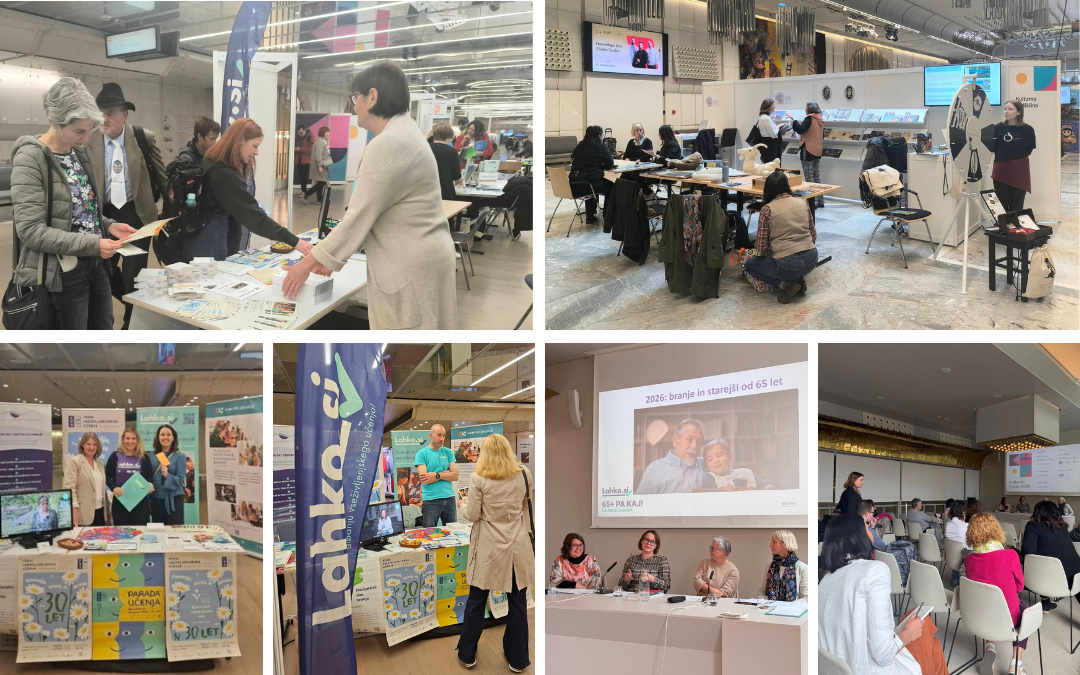
Examples of good practice in local-level cooperation were also presented. The round table featured Mojca Pompe from the Krško AEC, Anita Radkovič from Krško City Museum and Janja Štefan, Coordinator of Lifelong Learning for the Central Slovenia Region within the Awareness-raising for Lifelong Learning project and its accompanying Lahko.si campaign. The discussion was moderated by Alenka Štrukelj from the SIAE.
The Cultural Bazaar 2026 once again provided a space for inspiration, learning and cooperation, while encouraging reflection on the importance of accessible culture for all.
Mateja Pečar (mateja.pecar@acs.si), SIAE