

In the Summer edition of the SIAE Newsletter, we wrote about the Third EAAL Forum 2025, held at the Rog Centre in Ljubljana. It was dedicated to presenting Slovenian examples of innovative learning environments. On that occasion, we explained that, as part of the implementation of the European Agenda for Adult Learning (carried out in Slovenia under the EAAL project), several countries had decided to explore and exchange such examples during the 2024–2025 period. In addition to the June meeting in Slovenia, representatives involved in the so-called Peer Learning Activity (PLA) had already met in Hungary last September (read more here) and, most recently, in Slovakia.
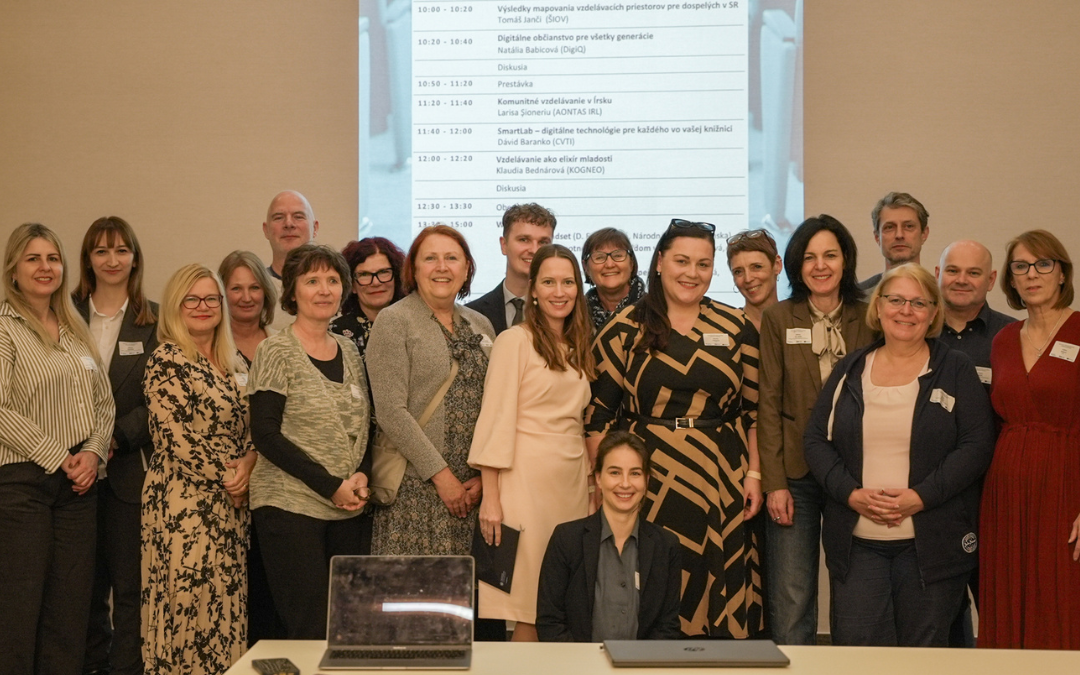
In Bratislava, on 15 and 16 October, we were hosted by the Slovak State Institute of Vocational Education, which, among other roles, serves as the national coordinator (NC) for EAAL, similar to the SIAE. The meeting brought together seventeen representatives from the EAAL NC network across nine countries: Belgium, Cyprus, Czechia, Germany, Hungary, Liechtenstein, Montenegro, North Macedonia and Slovenia.
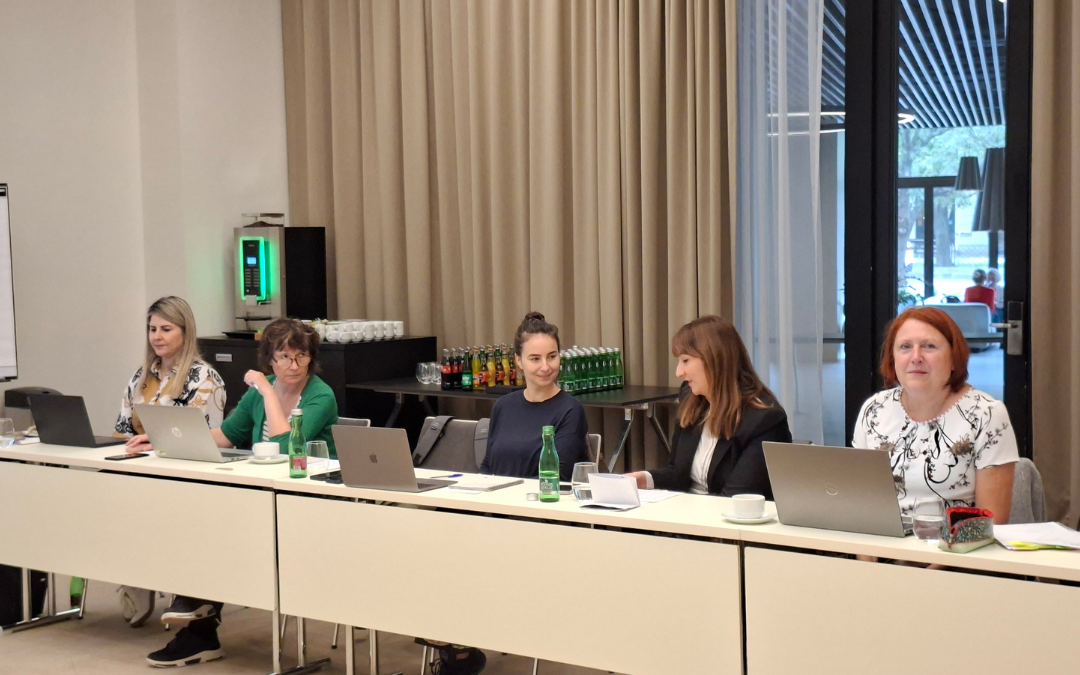
Slovenia was represented by the entire, 7-member EAAL project team of the SIAE, thereby bringing 13 years of work in this field to a close.
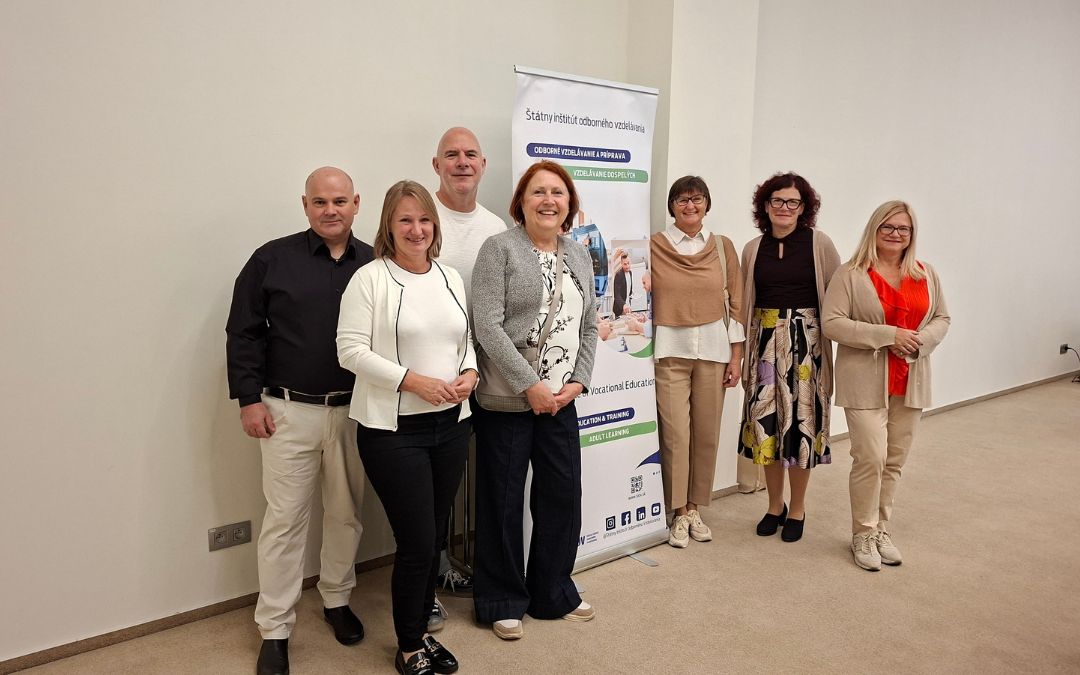
Slovak colleagues prepared a rich professional and accompanying programme
On the first day, we met in a smaller group. The focus was on sharing experiences, presenting good practices and deepening cooperation within the EAAL network. We also visited the National Bank of Slovakia as an example of excellent practice in developing financial literacy among adults.
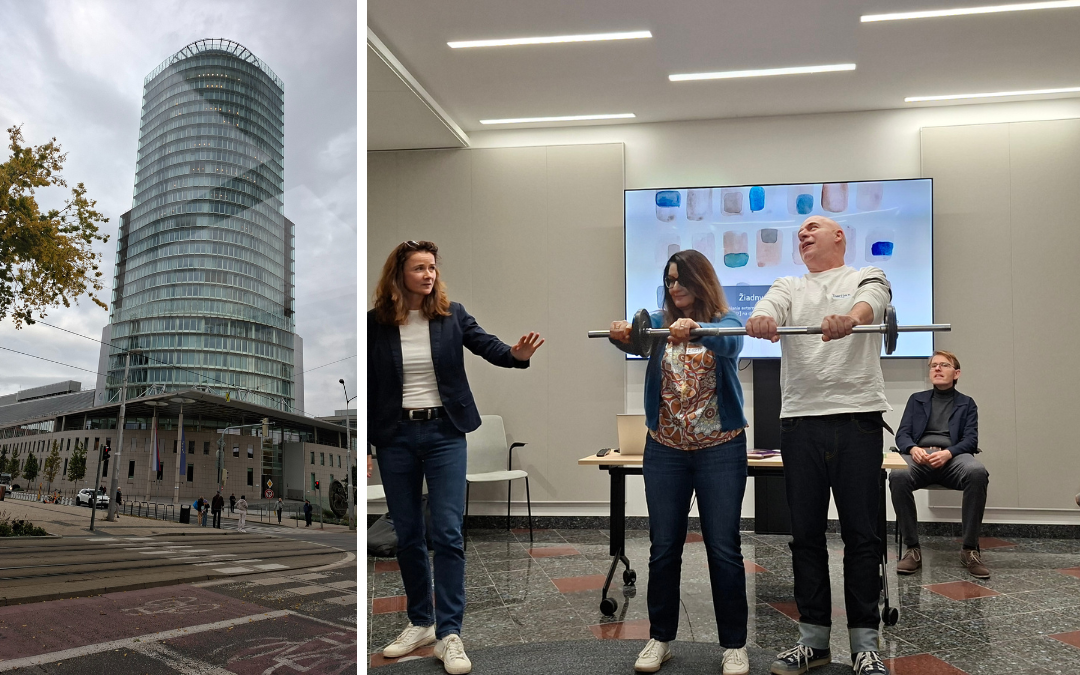
At the National Bank of Slovakia, we were introduced to the inspiring project 5 penazi, a highly effective initiative aimed at strengthening financial literacy among vulnerable target groups. We took part in a kinaesthetic demonstration illustrating the relationship between borrower and lender. From the roof of the magnificent building, we enjoyed a panoramic view of the city.
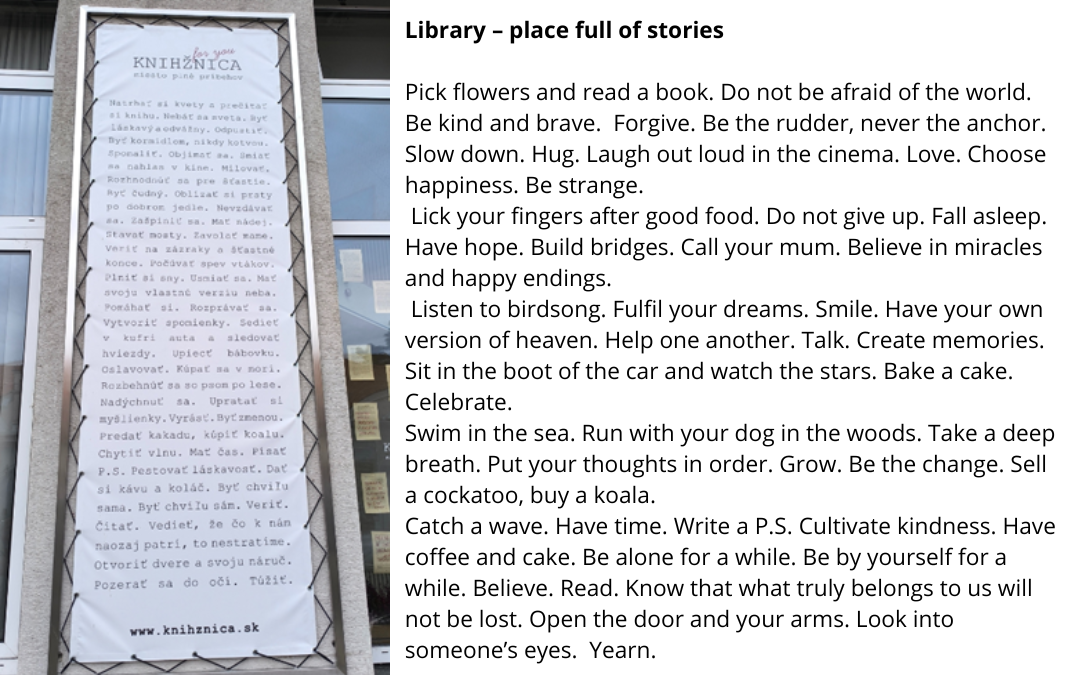
Places full of stories – this is how libraries are described in Slovakia. The inscription on the façade of one such library caught our attention on our first walk through Bratislava. A presentation by David Baranek from the Slovak Centre of Scientific and Technical Information at the conference revealed that Slovak libraries are also open spaces for developing a wide range of skills for everyone.
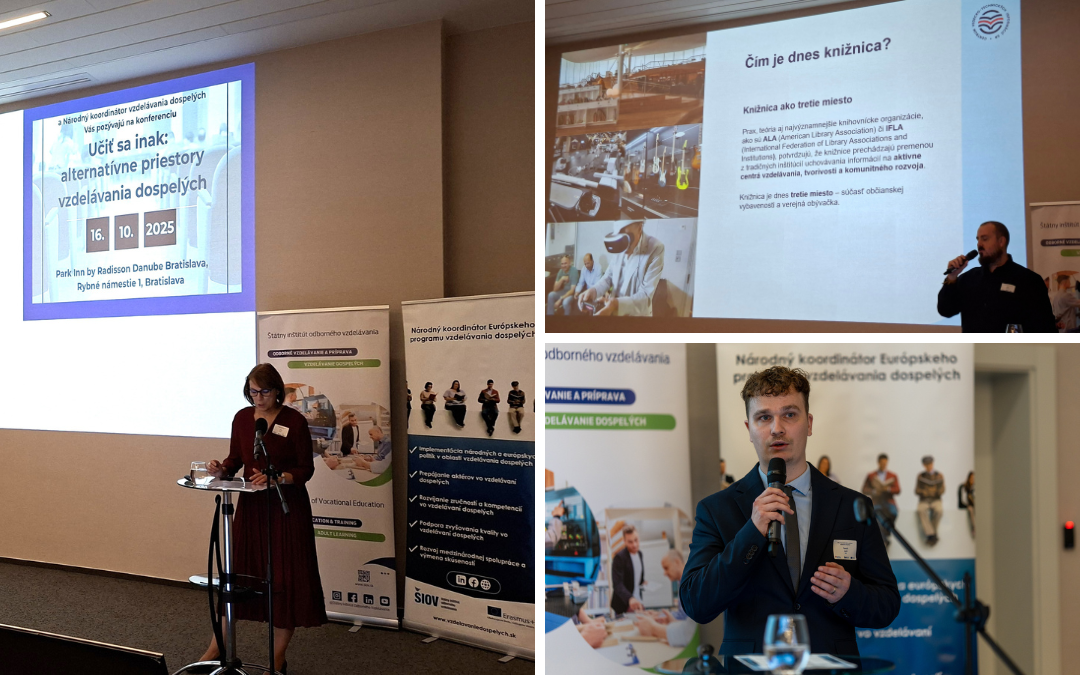
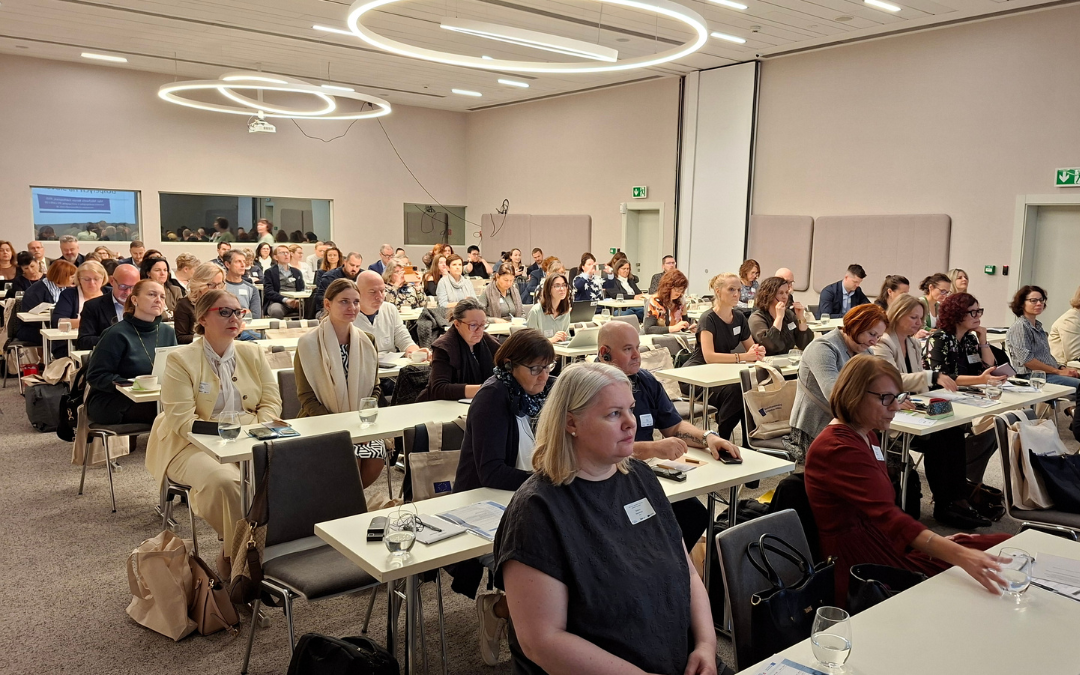
On the second day, the international conference Beyond Classrooms: Alternative Adult Learning Spaces attracted around 80 Slovak participants.
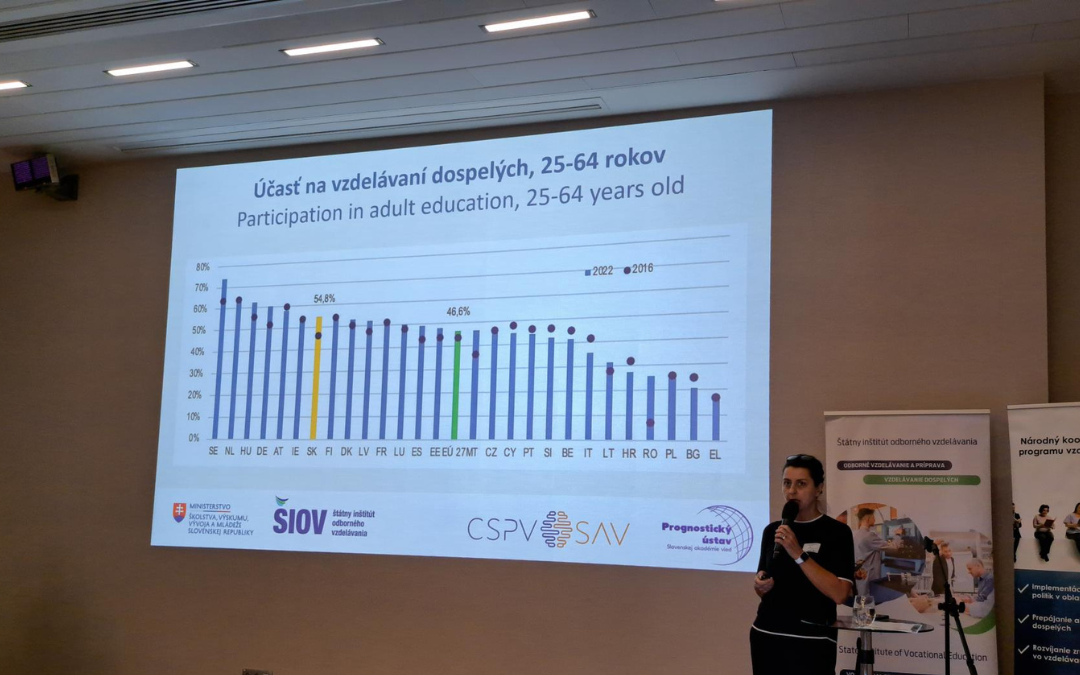
The conference also presented the results of the 2022 Adult Education Survey. Slovakia has a high participation rate of adults in education (54.8 %, Slovenia 42.4 %). The country is striving to create a culture of learning that recognises the diverse life situations of adults and enables them to learn beyond traditional classrooms.
The organisers later wrote: “The conference brought new perspectives on learning outside traditional school settings and showed that education is a lifelong process that can take place anywhere – in the workplace, in communities, in libraries or in online environments. Experts from universities, research institutions, non-governmental organisations and practice agreed that adult education is increasingly oriented towards personal and community dimensions. In addition, research shows that adults’ motivation for education stems primarily from inner needs for personal development rather than only from work-related reasons.”
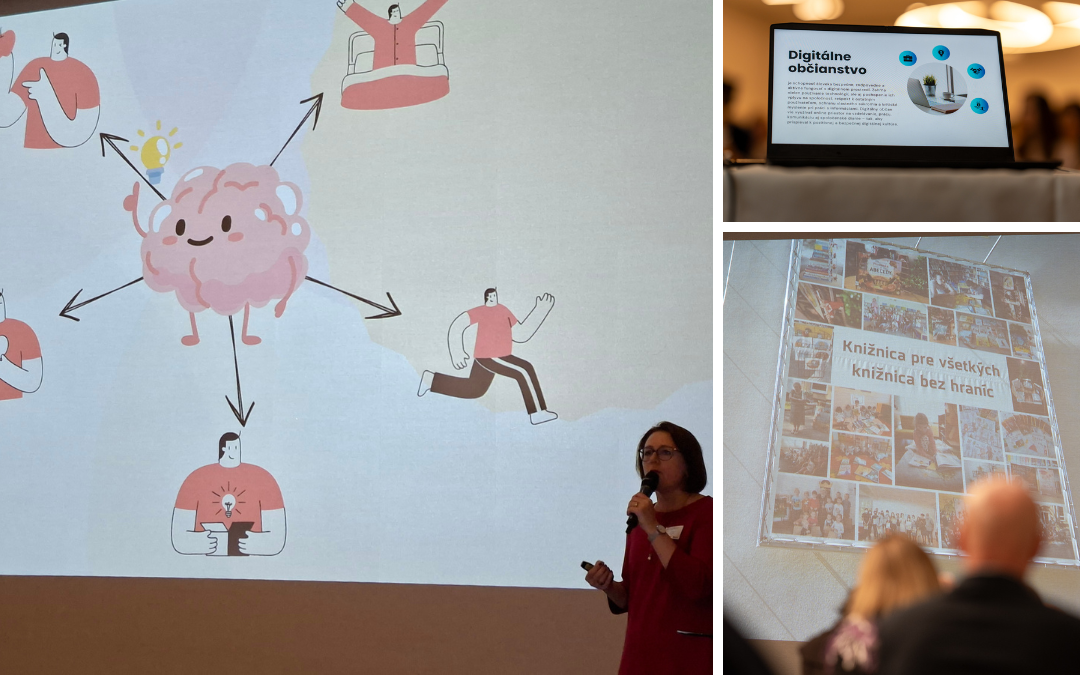
At the international conference, I felt truly inspired. At the same time, I experimented with different approaches to using generative artificial intelligence: I translated selected slides on the spot, explored new concepts and thematic starting points and formulated questions for speakers in English and later in Slovak via the Slido platform, which enabled more active participation.
The Slovak contributions were complemented by a guest from abroad, Larisa Șioneriu from AONTAS, Ireland. She presented community education as a second chance for people who previously had no opportunity for schooling — for example, those from marginalised groups or single-parent families.
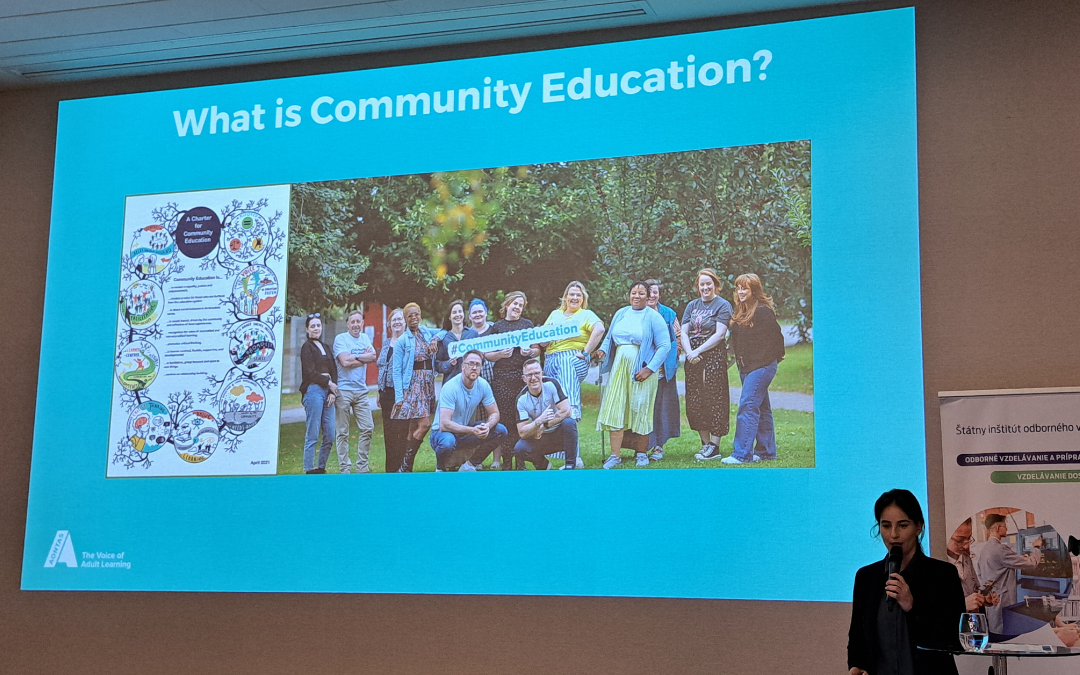
I pricked up my ears at the examples of good practice. Among other things, Larisa from AONTAS presented the Charter for Community Education, which defines the core principles of this type of education – from giving a voice to those furthest from the education system to building relationships between individuals and the community, and everything in between.
Activities on the theme of innovative learning environments continue
At the beginning of November, Germany also held its own PLA event. It showcased examples of innovative learning environments for adults to acquire basic education and skills. Although we did not attend this meeting, we will be able to learn about the experiences presented in a publication to be issued under the EPALE platform. This publication will bring together examples from all participating countries, and we will share the link once it becomes available.
We would also like to highlight the EAAL project subpage titled Innovative Learning Environments. It features interviews with the creators, organisers and participants of such environments. The videos present ideas that inspire, may even surprise, and truly encourage reflection on what is possible when we learn differently. At the invitation of the European Commission, we presented this website and some content from the aforementioned Third EAAL Forum at the final meeting of the 2024–2025 EAAL national coordinators on 14 November in Brussels. Our examples were very well received.
Zvonka Pangerc Pahernik, MSc (zvonka.pangerc@acs.si), SIAE