


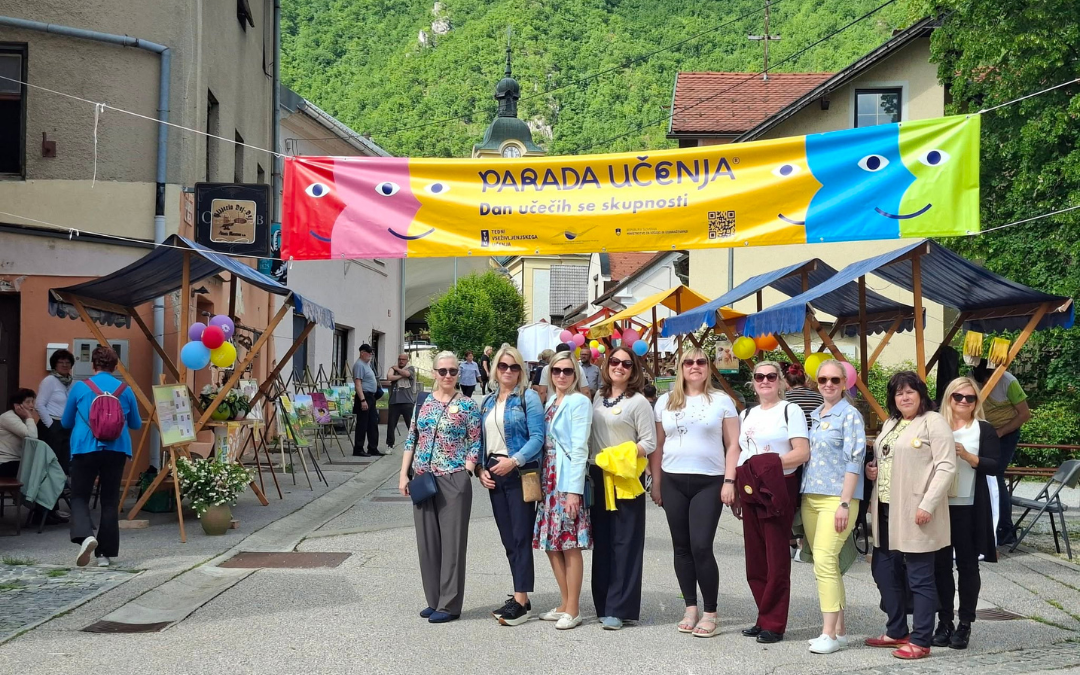
In May, we had the opportunity to participate in an Erasmus+ study visit to Slovenia, which focused on adult education and community engagement. Over four days, the organisations we visited and events we attended provided a comprehensive overview of one fundamental principle: learning does not exist as a separate system. It lives and breathes within the community. The experience made me reflect not so much on what Slovenia is doing, but how it is being done and for whom.
Learning begins where people already are
Our first visits to Slovenska Bistrica and Radeče took us straight into the heart of Lifelong Learning Weeks celebrations in smaller municipalities. In Slovenia, learning is not celebrated quietly or within the walls of institutions. It is brought out into the community. On 20 May, Learning Parade events took place across the country, turning learning into something visible and a shared experience.
In Slovenska Bistrica, the Learning Parade was aimed at the entire community: children, adults and older people participated together. Learning happened through practical activities, including crafts workshops, massage sessions, safety demonstrations and even quiet spaces where visitors could consciously rest and recover. This diversity created an environment where everyone could find something that spoke to them.
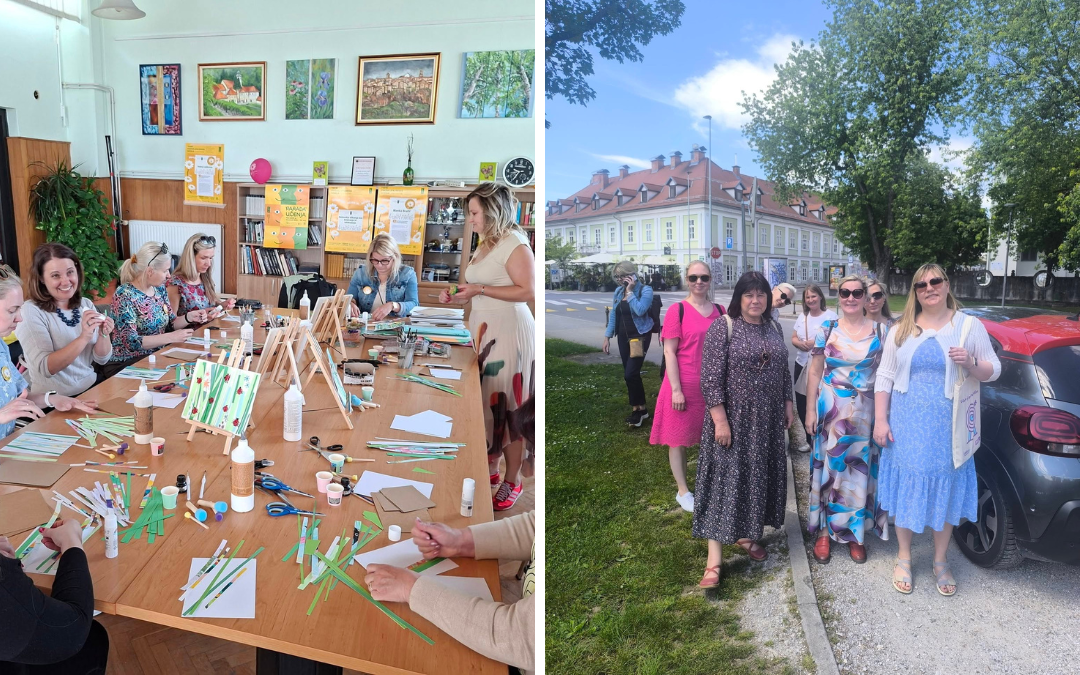
Later that day in Radeče, we experienced how learning can take over an entire town. The main street became a festival space where the community was both organiser and participant. People shared what they knew, and learning emerged naturally through conversation and joint action. The day fostered a strong sense of belonging and showed that learning is not an obligation but a way of bringing people together.
A system that supports
One of Slovenia’s strengths lies not only in its vibrant local communities, but also in the way they are supported at the national level. The Slovenian Institute for Adult Education (SIAE) provides a strategic framework, communication and a network of partnerships that promote lifelong learning across the country.
The institute’s role extends far beyond coordination. They shape the national conversation about learning – why it matters, who it should reach and how people can be encouraged to take part. This includes nationwide campaigns in the media and across the country during Lifelong Learning Weeks and the Learning Parade, communication materials, collaboration with local partners and, above all, continuous dialogue.
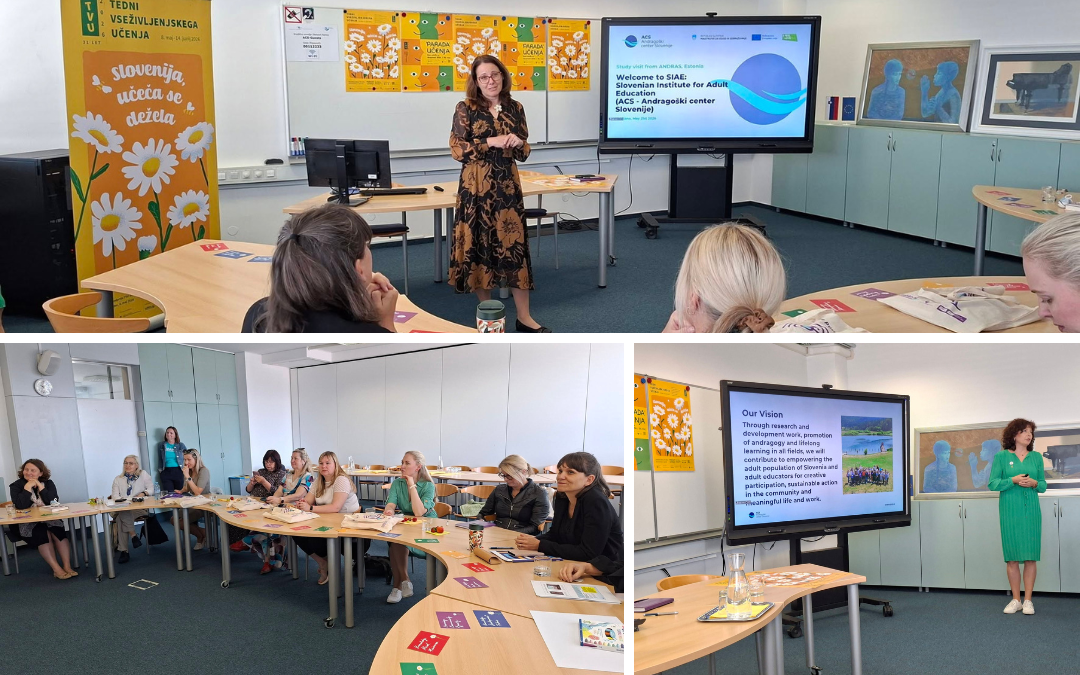
What particularly stood out was the human approach. Although the SIAE operates at a national level, its approach never came across as distant or bureaucratic. The discussions focused on real people, real concerns and practical solutions. For example, how to reach people who would never actively seek out learning opportunities or how to make learning the first step towards positive change rather than a last resort.
In Slovenia, the national system does not seem to stand apart from local communities; it works alongside them. This gives local organisers certainty – they do not have to figure everything out themselves, yet they have enough freedom to act.
That balance became even more evident during our visit to the Ljubljana Public Education Centre – Cene Štupar – CILJ. Here, learning is built around the individual – their needs, opportunities and pace. Learning is practical, supportive and often closely connected to everyday life, whether it is language learning, developing digital skills or job-related competences. It focuses on low-skilled adults, migrants and also young people who are still finding their path.
Centre Rog – where space creates opportunities
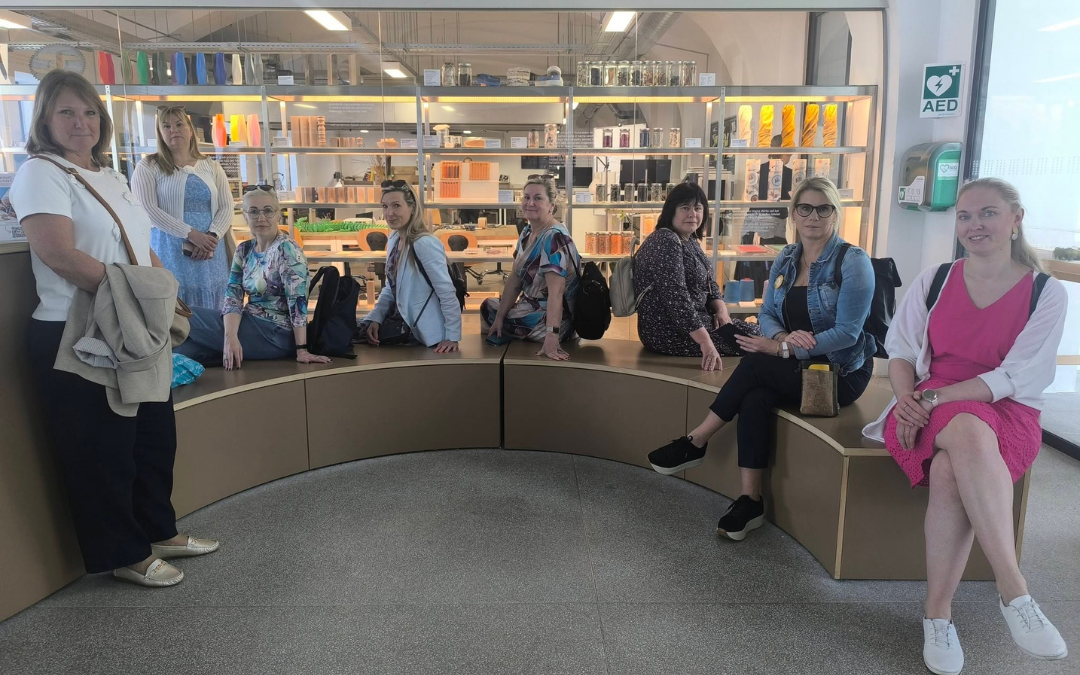
One of the most inspiring visits was definitely to Centre Rog in Ljubljana. The learning centre is an impressive example of how urban space can be used to support learning and development.
The former bicycle factory has been carefully restored with the support of the municipality and transformed into a modern and multifunctional centre. While its industrial character has been preserved, it now combines contemporary architecture and smart solutions. The result is an environment that is both inspiring and welcoming.
Different worlds come together at Centre Rog. Workshops for crafts, design and technology sit alongside open spaces for collaboration and learning, a library and facilities for start-ups and creative professionals. The urban space is enriched by an environment that inspires you to create, experiment and develop yourself.
Learning here happens naturally through action. People don’t just come to acquire knowledge, but to create it, share it and inspire others. Learning becomes part of both personal and professional growth. The visit made me think about just how important the physical environment can be in learning. When a space invites people to participate, they naturally become active.
Youth centre – responsibility and opportunity go hand in hand
Our final visit took us to a youth centre, where we saw an inspiring example of how young people can be encouraged to take an active role in their community.
Housed in a former sugar refinery that has also been renovated with municipal support, the centre is full of inspiring opportunities for young people aged 15 to 29. To take an active part in its activities, young people first become members. Membership also brings responsibility – they are expected to volunteer, help organise activities and be active members of the community.
In return, they are given opportunities to propose projects and ideas. If they prove feasible, they receive support from a mentor and often funding to help bring them to life. Through this process, they gain experience in project management, cooperation and taking responsibility. The centre also works with volunteer supervisors and counsellors, who provide guidance and support at a time when many young people are facing increasing mental health challenges.
This model fosters independence and self-confidence. Young people are not just participants, but creators. They learn through experience, and those experiences prepare them for the future.
What is different and what can we learn?
Slovenia is not radically different from Estonia, but there are some important nuances in the way learning is approached. It is more visible, communities are more actively involved, and non-formal learning is recognised as a natural part of the educational landscape.
It was particularly clear that the focus of learning is not on the programmes or structures, but on people and their experiences. Every opportunity is used to support learning – from events in town squares to creative centres and youth organisations.
This learning mobility did not provide ready-made answers, but it offered plenty of food for thought. Slovenia showed that learning can be joyful, visible and a powerful force for bringing communities together.
Sometimes we don’t need to make big changes. All we need is to create a space – both physical and mental – where people can come together, share ideas and learn from one another.
Learning does not always begin in the classroom. More often it begins simply with a meeting.
We would like to thank the Slovenian Institute for Adult Education (SIAE).
The learning mobility took place under the Erasmus+ programme as part of a job shadowing initiative and was organised by ETKA Andras for adult education coordinators.
Jaanika Tappo (jaanika.tappo@tln.lib.ee), Adult education coordinator in Tallinn (ETKA Andras) and head of the Tallinn Liivalaia Library