


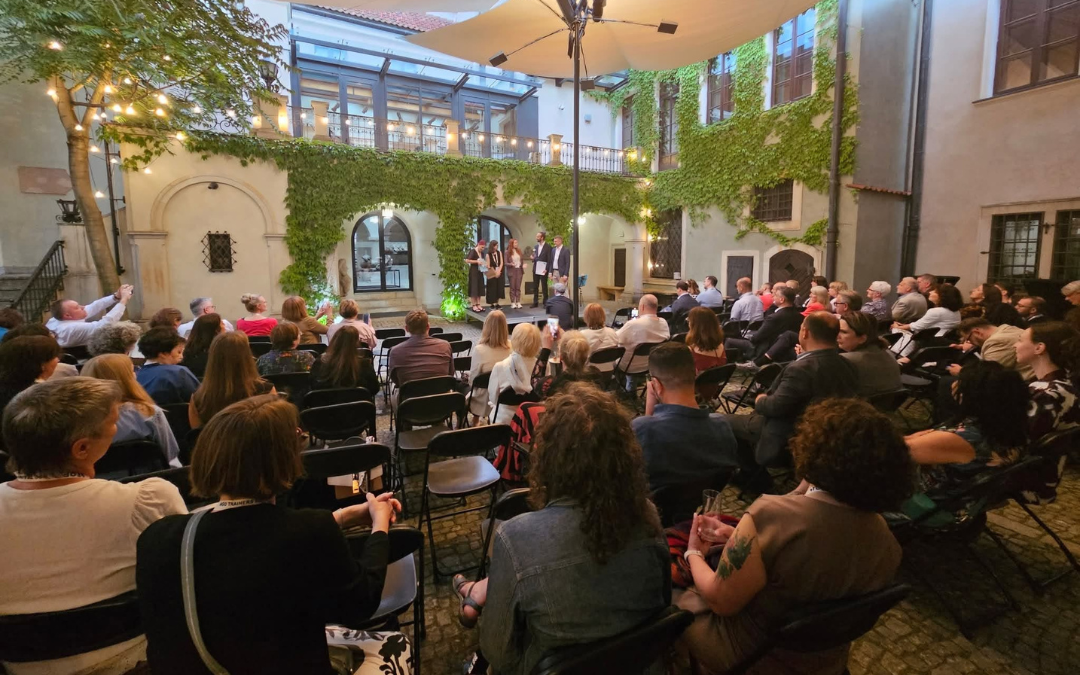
On 9 and 10 June, the European Association for the Education of Adults (EAEA) held its Annual Conference and General Assembly in Warsaw, bringing together adult education professionals from across Europe to explore the theme of resilience and community building. Participants included representatives of adult education organisations, researchers, policymakers and practitioners. At the heart of the conference was a shared question: how can adult education help build more connected, inclusive and resilient communities in a time of rapid social, economic and technological change?
Day one: a shared vision and celebrating good practice
The opening day centred on the EAEA General Assembly, strategic discussions on the Association’s future and the exchange of experience among member organisations. Participants also contributed to the development of EAEA’s new strategy by identifying the key challenges and priorities that will shape adult education in Europe over the coming years.
The evening was devoted to the presentation of the Grundtvig Award, Europe’s most prestigious recognition for innovative projects in adult education. Named after the Danish educator and thinker N. F. S. Grundtvig, one of the founders of the folk high school movement and a strong advocate of lifelong learning, the award recognises projects that promote inclusion, build trust, encourage active citizenship and strengthen communities. The conference highlighted projects demonstrating how adult learning can make a meaningful contribution to social cohesion and to addressing today’s challenges.
The two award-winning projects highlighted volunteering and citizens’ assemblies as powerful drivers of resilience and community building:
- Izmir Citizens’ Assembly for Climate, led by YUVA Association (Türkiye);
- Developing Volunteering as a Part of Individual Learning Path (VOLUGRAM), coordinated by Tartu Vocational College (Estonia) together with its project partners.
From the very first day, one message came through clearly: non-formal adult education is not a marginal activity, but an important part of Europe’s social development. Alongside developing knowledge and skills, it helps people reconnect with their communities, strengthens self-confidence, encourages active citizenship and creates opportunities for cooperation across generations and between different social groups.
Day two: resilience as a collective strength
The conference’s main day opened with the keynote Growing Resilience Together: Adult Education for Inner Strength and Community Connection, delivered by Alicja Gałązka. She challenged the audience to think of resilience not simply as an individual’s ability to cope with adversity, but as something that develops through relationships and communities. In this way, adult education becomes a bridge between personal growth and wider social change.
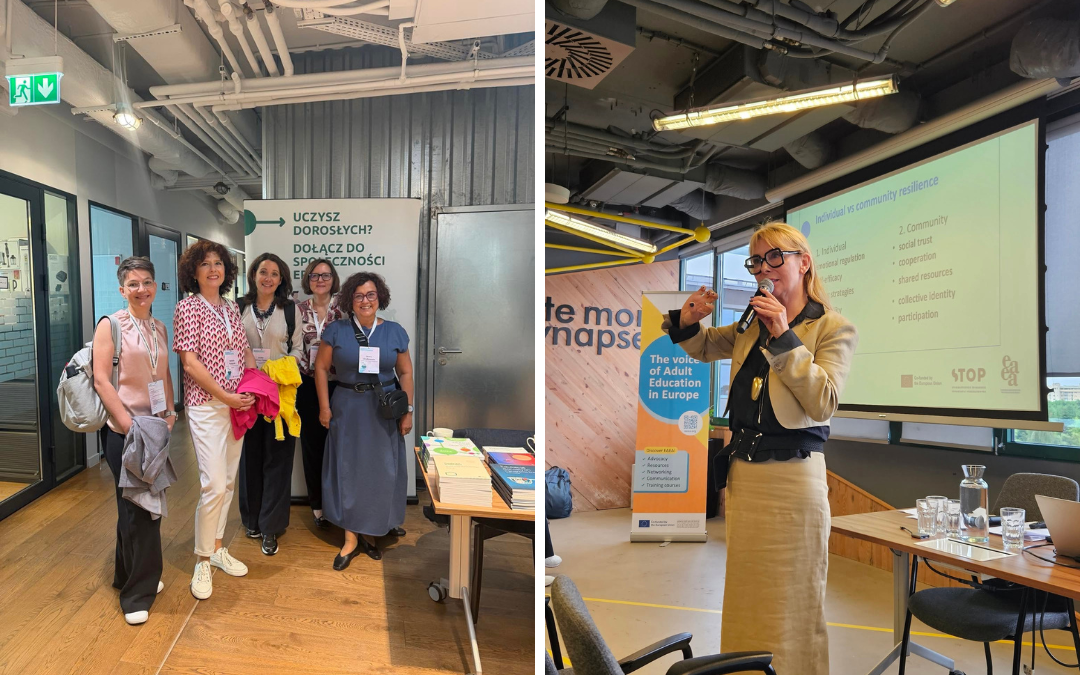
One of the keynote’s most thought-provoking messages was the power of the stories we tell about ourselves. Gałązka suggested that changing our lives begins with changing our personal narratives – that we need to become the editors of our own life stories. Turning points are not merely events that happen to us, but opportunities to see our experiences differently and to grow. Instead of asking, “What happened to me?”, we might ask, “What can I gain from this experience?”
She also warned against becoming trapped in fixed ideas about ourselves. When people define themselves solely as victims or allow a single life story to shape their identity, they limit their opportunities for growth. Resilience means being able to view experiences from different perspectives and recognise the strength they can reveal.
The conference also explored one of today’s pressing challenges: how to reach people who are increasingly retreating into digital worlds and losing their sense of belonging. Several speakers emphasised that resilient communities recognise and nurture the strengths of their members. Resilience is not about being untouched by adversity, but about how we respond to difficult circumstances. It is a dynamic process that evolves throughout our lives. An important part of resilience is also developing an awareness of our bodies and recognising how they respond to different situations. One of the conference’s strongest messages was that resilience cannot be built alone – it grows through connection, collaboration and mutual support.
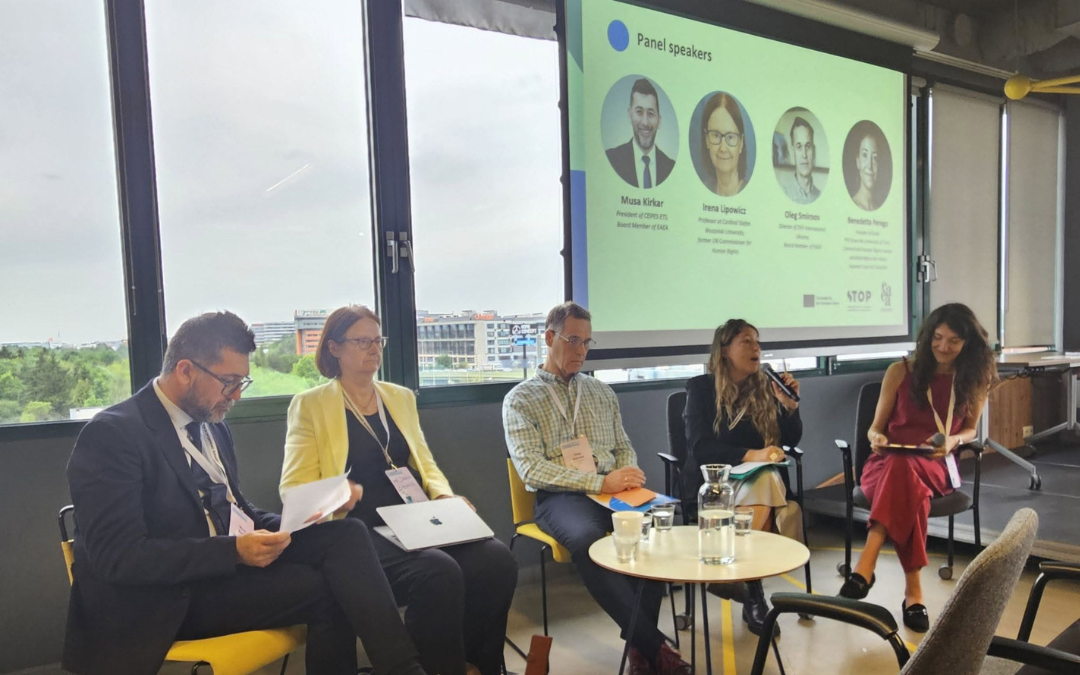
The keynote was followed by the panel discussion Resilient Communities in Times of Crisis. Panellists Musa Kirkar, Irena Lipowicz, Oleg Smirnov and Benedetta Perego reflected on the experiences of communities facing war, social tensions and other crises. The discussion revealed striking differences in how countries perceive stability and peace. While some face the immediate threat of armed conflict, others focus on different societal challenges. As a result, the priorities also differed: some participants called for greater investment in education for peace and tolerance, while others stressed the need to strengthen communities’ preparedness for emergencies. Yet one conclusion was shared by all: adult education, trust between people and strong local networks are indispensable foundations of resilient societies.
Workshops: from research to practical solutions
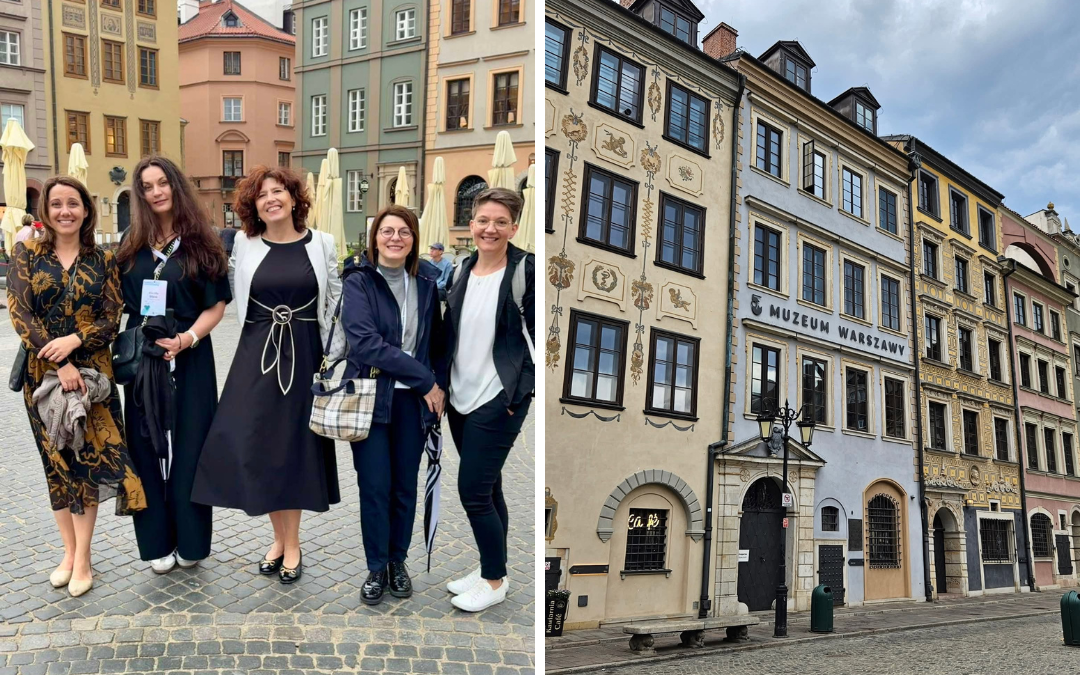
The afternoon programme featured six parallel workshops covering topics such as strengthening the democratic role of adult educators, improving access to education in closed settings, quality assurance in adult education, inclusive communication with migrants, theatre and gamification methods and participatory approaches to building resilient communities.
I joined the first workshop, which explored the role of adult educators in strengthening democracy and societal resilience. It quickly became clear that adult education has no shortage of high-quality programmes and inspiring examples of good practice. What it lacks is robust evidence to demonstrate their impact to policymakers. Participants therefore stressed the need for comparable national data and research that clearly show the links between non-formal learning, the development of basic skills, the inclusion of vulnerable groups and the wider economic and social benefits these bring. Such evidence is essential to securing long-term recognition and sustainable funding for the sector.
The conference once again demonstrated that adult education is about far more than preparing people for the labour market. It creates opportunities for people to meet, build trust, strengthen active citizenship and develop communities that can respond collectively to the challenges of our time. Ultimately, it is this sense of connection that remains one of the greatest sources of resilience in European societies.
Urška Bittner Pipan, MSc (urska.bittner.pipan@acs.si), SIAE