

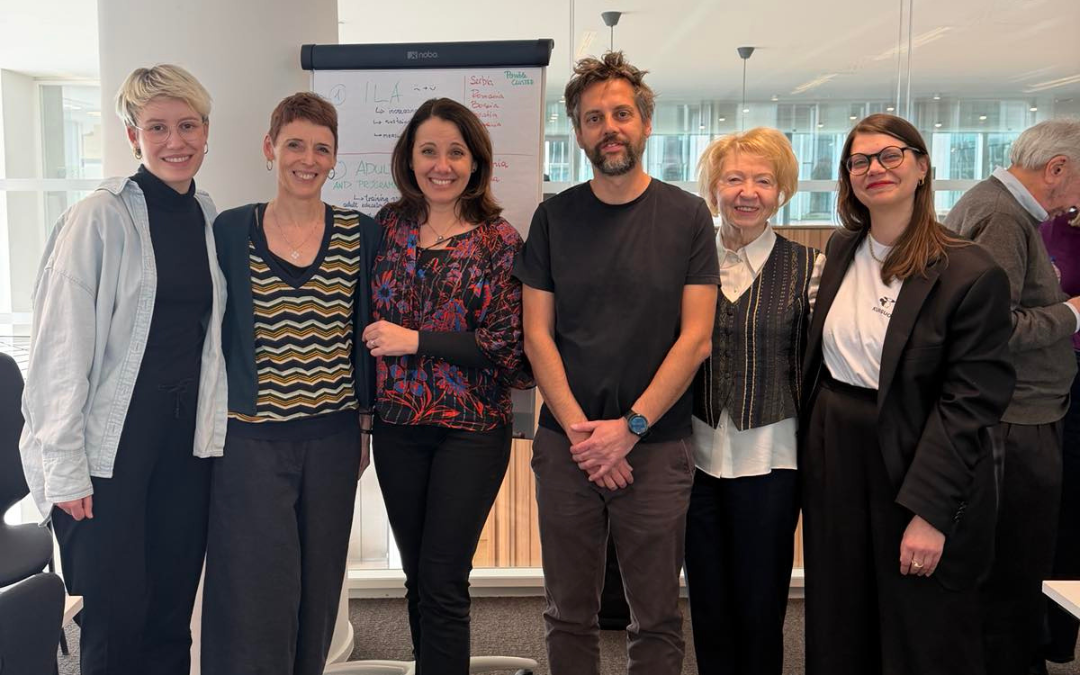
In March, I attended the first European Agenda for Adult Learning (EAAL) national coordinators’ meeting in Brussels. The programme focused on current European policy directions and opportunities for future cooperation.
At the start of the meeting, we listened to representatives of the European Commission. Alongside the new funding cycle, they highlighted key policy priorities in the field of adult education. I felt particularly proud that Slovenia continues to rank among the most successful countries participating in the programme, reflecting many years of high-quality work in this field. Much of the credit goes to Zvonka Pangerc Pahernik, MSc, who represented Slovenia with distinction and always spoke highly of adult educators in Slovenia. We can truly take pride in our work while remaining open to new opportunities, directions and continued growth.
The importance of international cooperation
This was followed by an overview of the thematic groups’ achievements in the previous period. The presentations highlighted the importance of international cooperation and the exchange of good practices. Discussions focused on identifying which approaches should be further developed and carried forward into future activities.
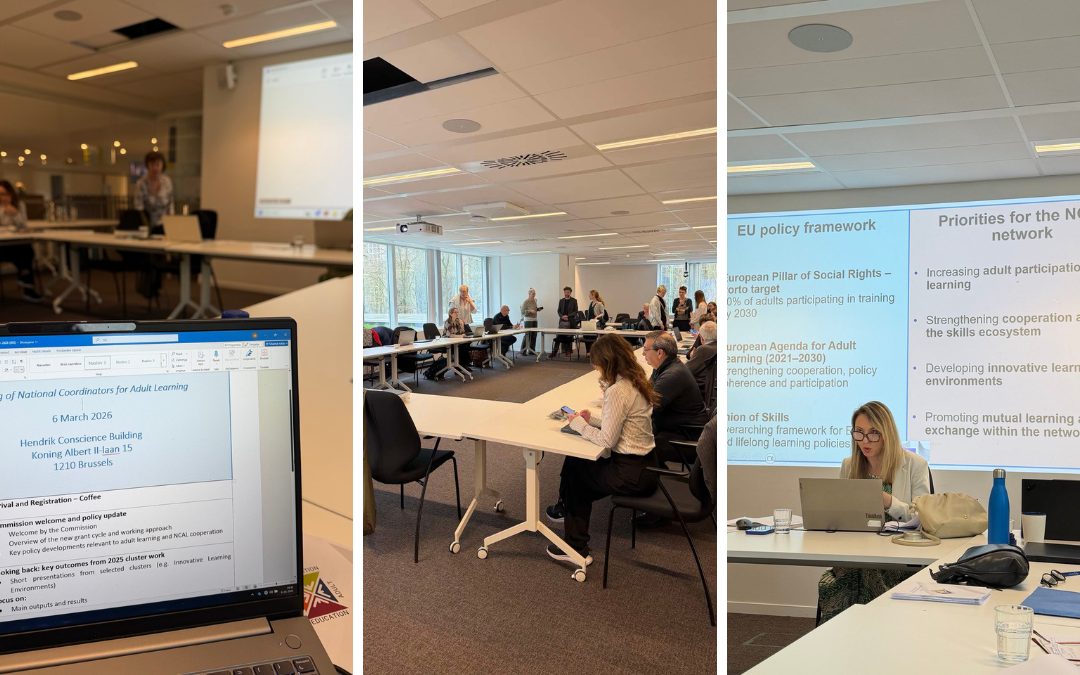
We then jointly defined priorities for the 2026–2027 period. Participants exchanged ideas for new projects and thematic groups while identifying common areas for cooperation. Particularly inspiring was a presentation on the use of art in adult education, which opens up new possibilities for greater inclusion and participant motivation.
Innovative learning environments
The final part of the meeting was devoted to self-organised thematic group sessions. Discussions focused on the continuation or restructuring of existing groups and on planned activities for the coming period. We identified countries interested in participating in individual groups and potential coordinators for those groups. Study visits, peer-learning activities and other forms of professional exchange were highlighted as important future activities.

We agreed that it would be worthwhile to continue work in the field of innovative learning environments while further strengthening the visibility of the project’s achievements. Other topics that have not yet been organised into thematic clusters include Individual Learning Accounts (ILA), adult educators and programme accreditation, as well as qualification frameworks.
The meeting provided me with many new ideas, confirmation of the quality of our work and additional motivation for future challenges.
Urška Bittner Pipan, MSc (Urska.bittner.pipan@acs.si), SIAE