


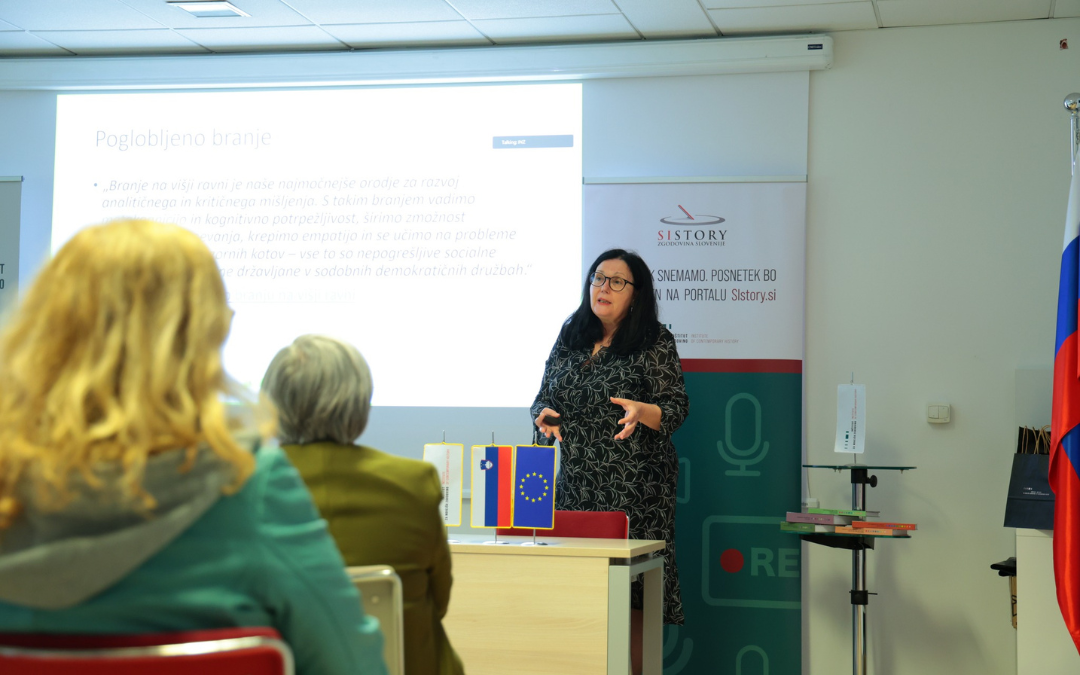
As part of the Afternoons with Digital Humanities (DARIAH) series, we presented the topic Why Reading Really Matters at the Institute of Contemporary History on 5 May.
DARIAH is a European social and technological network that brings together people, expertise, data, content, methods, tools, and technologies for research, discovery, and support across a broad spectrum of digital humanities. The Slovenian member institution of the network is based at the Institute of Contemporary History. The institute is also among the more advanced organisations integrating complex digital technologies into scientific research. A central element of its work is the History of Slovenia – SIstory online portal and digital library developed within the framework of the Research Infrastructure of Slovenian Historiography programme. The SIstory portal is an online system for Slovenian historiography which, in addition to providing access to historical content relevant to the study of Slovenian history, also enables the creation and use of research data within a dedicated research environment. The repository contains over 60,000 records, including scientific literature, archival sources, census data, and World War II casualty records (data for 2025 obtained through artificial intelligence).
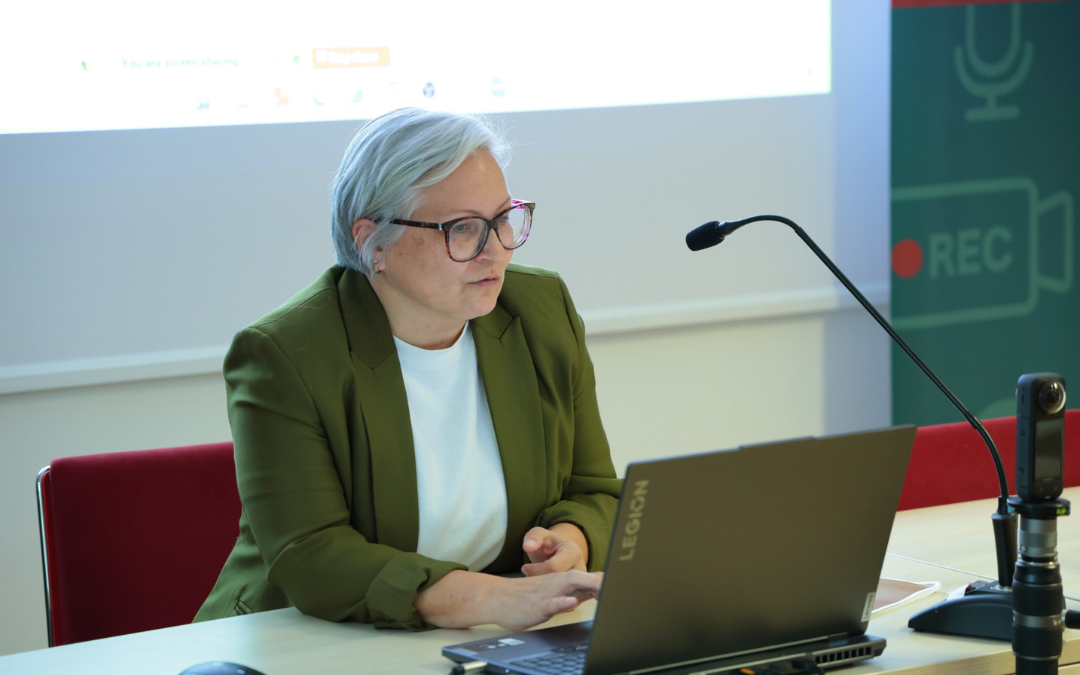
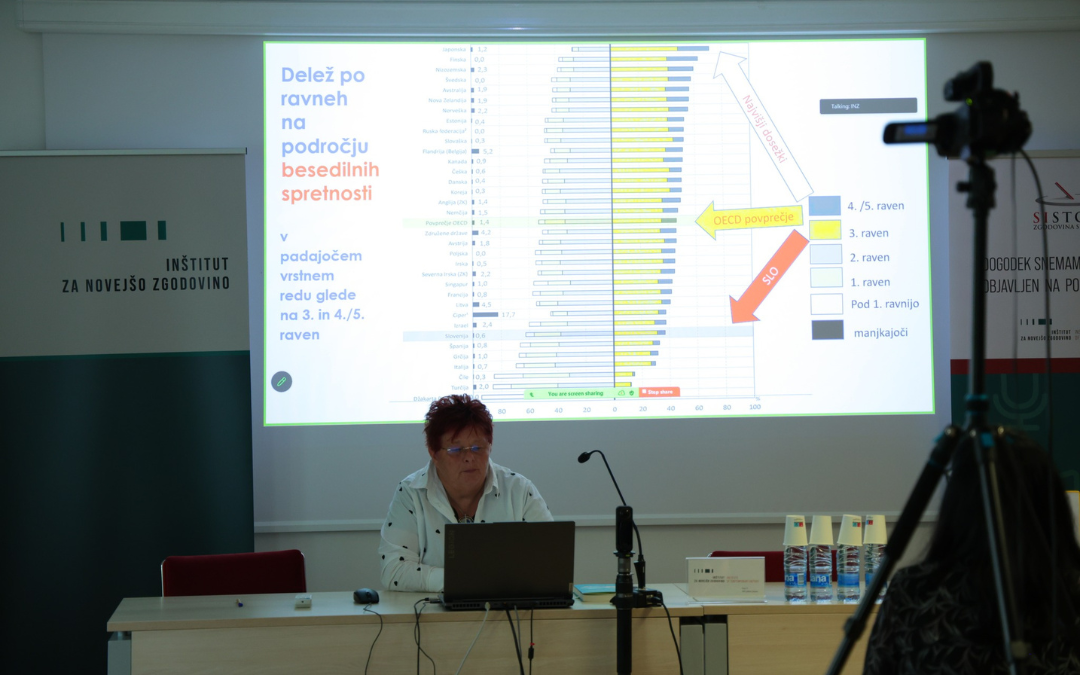
Our presentation was followed by a highly engaging discussion with the audience, during which we reflected on the factors contributing to the decline in reading literacy. We also considered the consequences of this decline and explored how reading literacy affects digital literacy, which is itself a highly complex competence. Digital literacy is not simply about using digital tools or ensuring online safety. In addition to the ability to assess the credibility and relevance of digital materials, it also requires broad general knowledge and all the core skills associated with reading literacy: critical thinking, the collection, comparison, synthesis, and ethical use of diverse (digital) materials, and the ability to use them in ways that align with both humanistic and sustainability values. In fact, we read – and live – within two parallel worlds: the physical world and the cyber world, which functions as a kind of digital counterpart to physical reality. Alongside the new skills required for digital literacy, we therefore continue to need all the traditional competencies associated with reading literacy. This is precisely why deep reading remains essential, even in an age of advanced technology.
We want to thank the staff of the Institute of Contemporary History, especially Dr Mojca Šorn and Dr Vojko Gorjanc, not only for the invitation, but also for providing exhibition space for our travelling exhibition Portraits of Reading.
Natalija Žalec, MAEd (UK) (natalija.zalec@acs.si), SIAE