

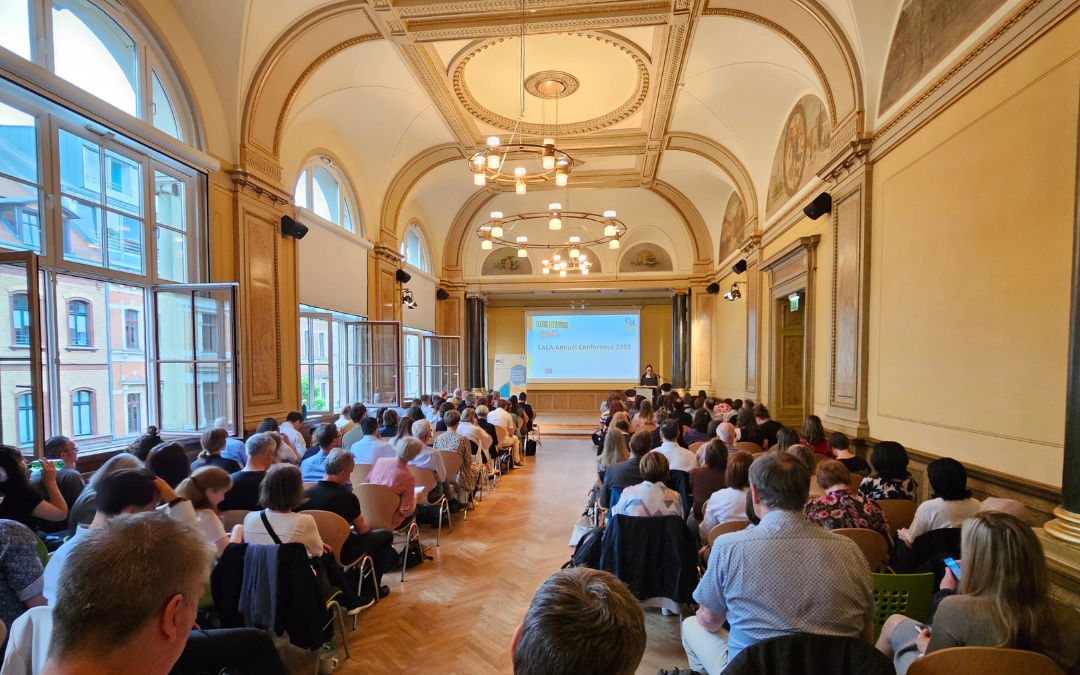
Each year, EAEA organises several topical professional events for its members. The most significant is undoubtedly the Annual Conference, traditionally combined with the General Assembly and the award ceremony. This year, the two-day event took place on 3 and 4 June in Leipzig, eastern Germany. The theme, Flexible Learning Pathways, attracted over 150 participants across Europe and beyond, including representatives from Ukraine and Moldova. The German EAEA members DVV International (Institute for International Cooperation of the German Adult Education Association) and the Leipzig Adult Education Centre were co-organisers.
New EAEA governance, new awards
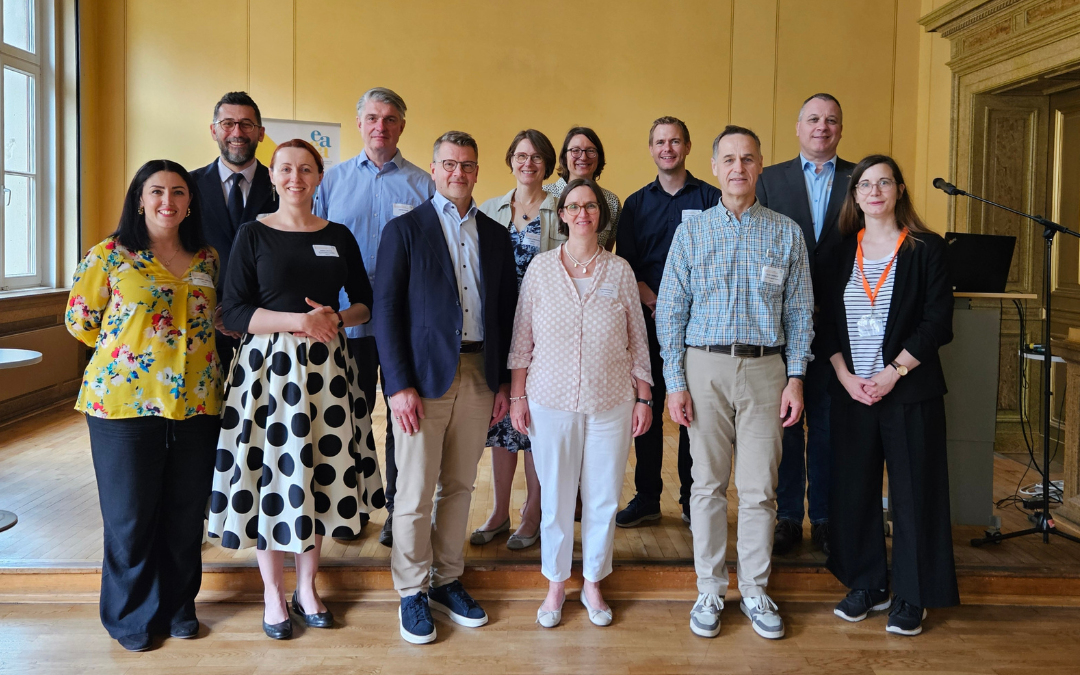
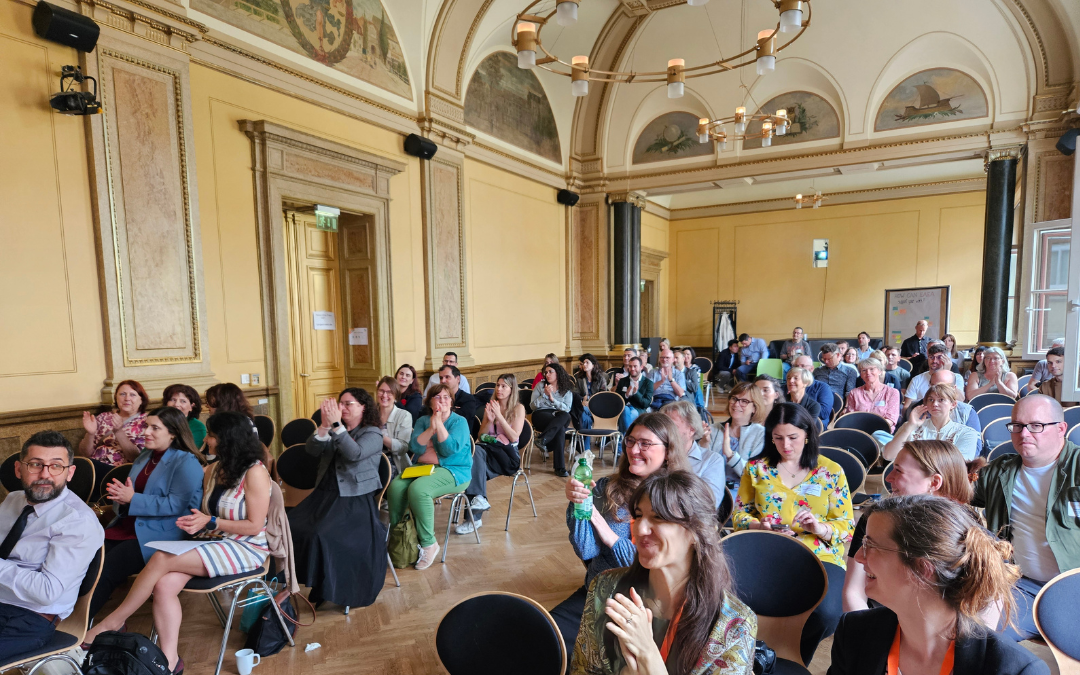
The SIAE representatives limited their participation this year, attending only the evening award ceremony on the first day – the EAEA Grundtvig Awards and the awards for international cooperation in ALE, presented by DVV International. The latter are named after Rita Süssmuth, a renowned German politician and strong advocate of ALE.
Flexibility of learning pathways has multiple dimensions
On the second day, we attended the Annual Conference, opened by EAEA Secretary General Raffaela Kirher – young both in tenure and in age. In addition to the flexibility of learning pathways, she highlighted the central role of learners as active participants in the learning process.
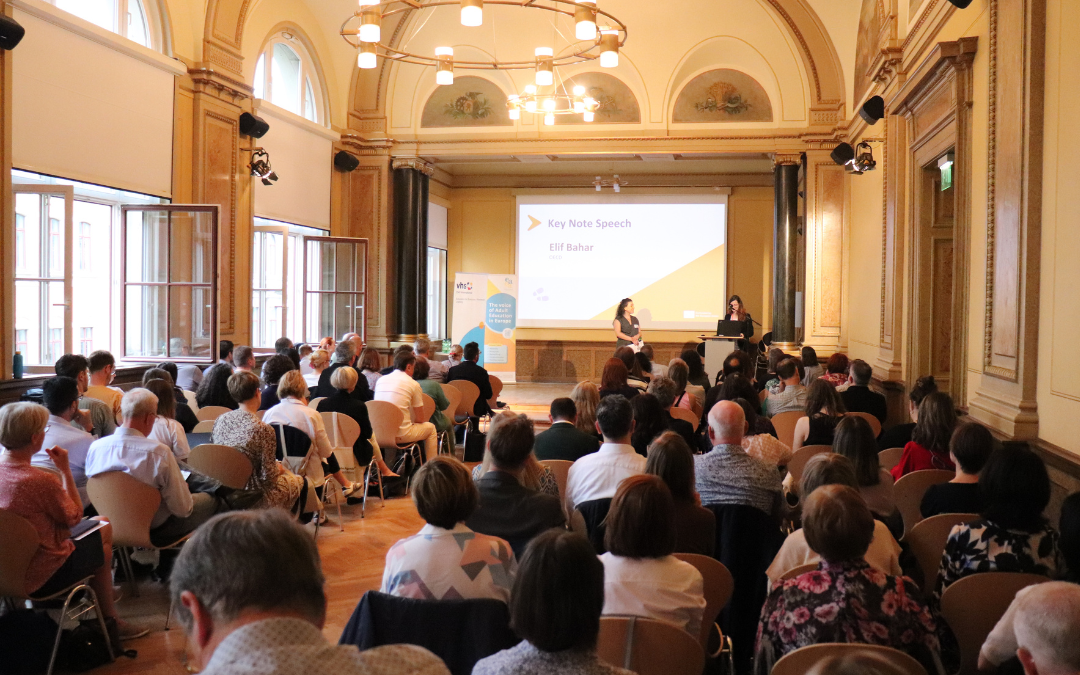
The keynote address was delivered by Elif Bahar from the OECD, who presented findings from the 2023 PIAAC Survey of Adult Skills, based on data from over 160,000 adults worldwide. According to the study, one in four adults faces barriers to participating in ALE. The most common obstacles include a lack of time due to work or family commitments, high education costs and low self-confidence or motivation. To overcome these, the OECD recommends a more modular approach to learning, effective recognition of prior learning, less rigid entry requirements and improved transparency and quality assurance within education providers.
Later, participants joined working groups to address pressing ALE challenges. A recurring theme across all groups was the need to highlight ALE’s transformative power for individuals and society at large. In today’s world of rapid change and complex issues, learning equips us to respond effectively, both individually and collectively.
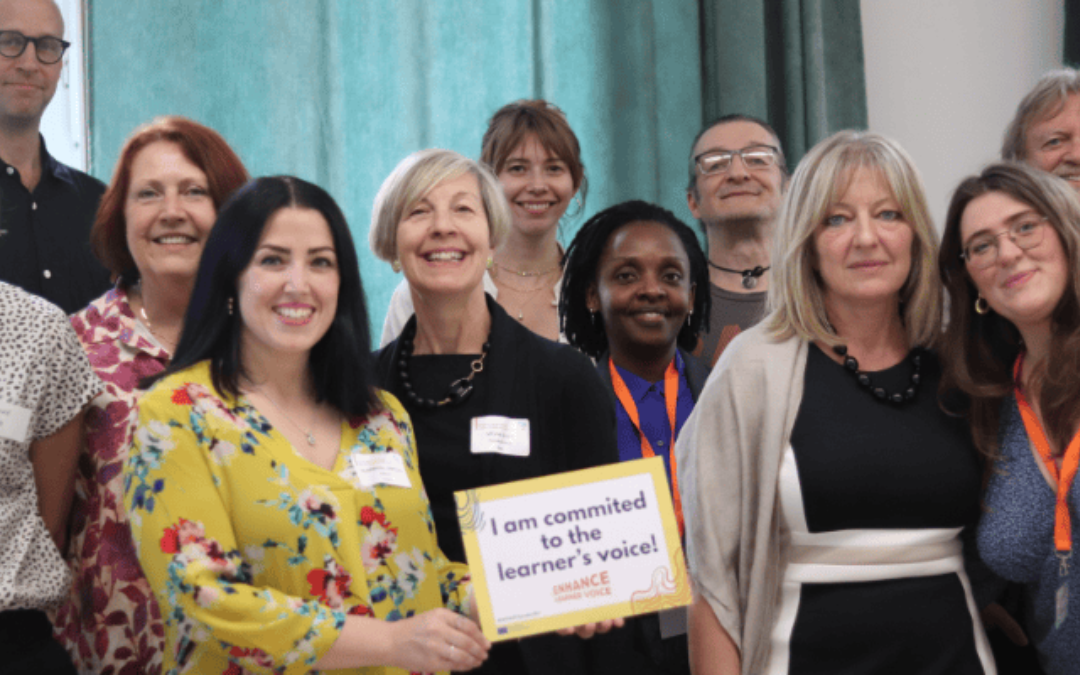
Lively discussions in the working groups enriched us professionally
The morning brought an engaging working group session in which we explored two key dimensions of socio-economic transition: sustainability and competitiveness. At first sight, these concepts might appear to be at odds, yet our discussion revealed that they can, in fact, be connected and even create valuable synergies. We recognised learning – essential for safeguarding enduring values and acquiring new knowledge and skills – as a universal right and a driving force for change. Learning empowers individuals to move from a reactive stance to a proactive role. To make this possible, we concluded that partnerships are crucial: with decision-makers, businesses, other key stakeholders and learners.
In the afternoon, I joined the working group entitled Learner agency and action: Addressing strategies for fostering self-determination and collective action in ALE. It was the first time I had encountered the term agency in the context of learners’ autonomous action. I had a rough idea of what it might mean, but to be sure, I also checked with ChatGPT. It explained the concept as follows:
“In the context of education – and more broadly in the social sciences – learner agency refers to an individual’s capability and power to act autonomously, make independent decisions, take initiative and influence their own learning and environment. It highlights the learner’s active role – not as a passive recipient of knowledge but as an active co-creator of their own learning journey.”
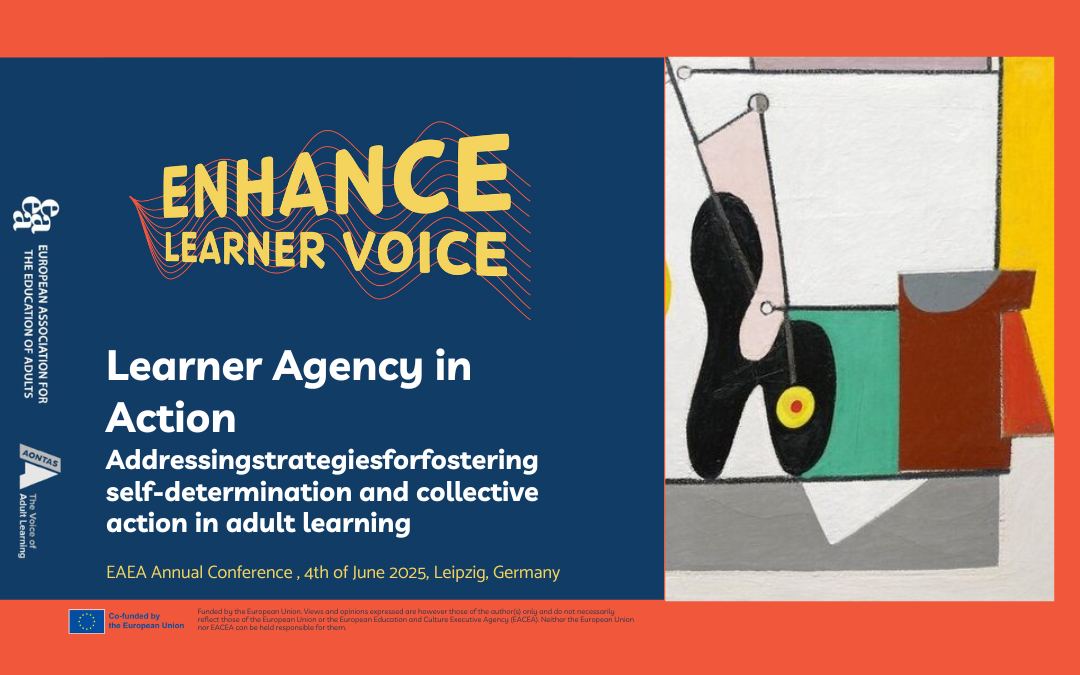
This discussion in our group was built on the findings of the project ENHANCE – Enhancing Learners Voice.
At the SIAE, we mainly engage with learners through the SIAE Awards. However, the project and our group pushed the conversation further, stressing the importance of including learners’ voices in decisions about their educational pathways – from planning, ensuring accessibility and flexibility through implementation, and finally, evaluation. In other words: nothing about learners without learners! This approach is still underdeveloped across much of Europe, although Ireland and England are leading the way. It requires, among other things, preparing learners for this role by providing training and, above all, fostering their willingness and readiness to act as advocates. In Slovenia, we briefly explored this idea in 2005 with the concept of a Learners’ Forum. Perhaps now is the time to revisit it? You can find more insights from this working group here.
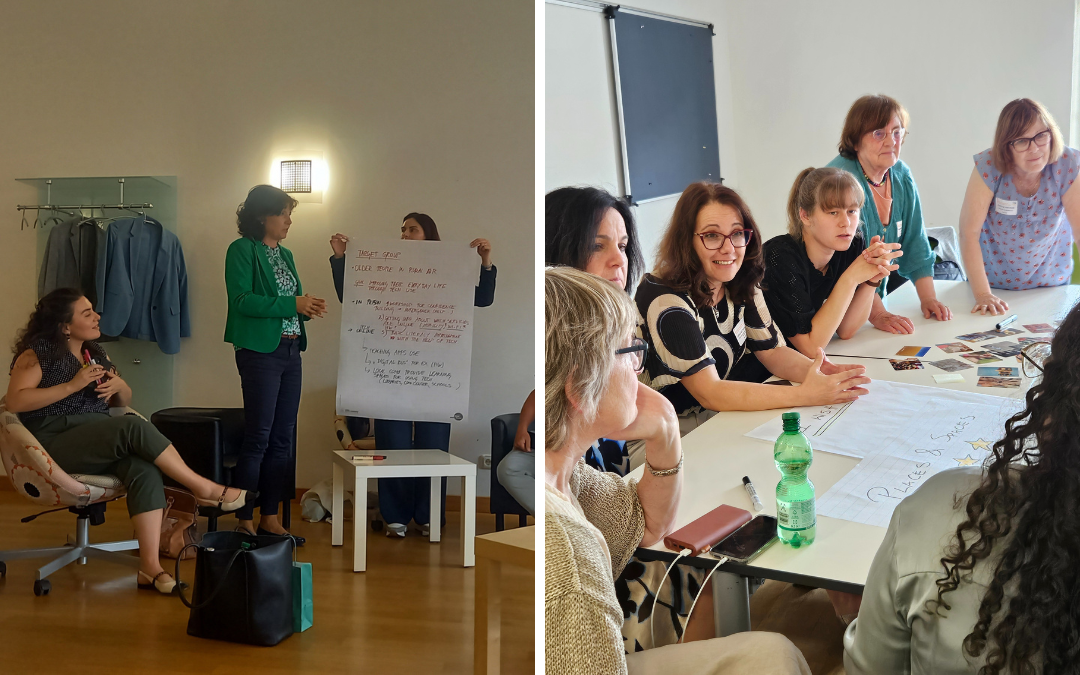
My second annual meeting of EAEA members took me to Leipzig, Germany – and, as expected, it brought fresh insights and inspiring encounters. Once again, it became clear how important it is for Slovenia to remain closely connected with developments in European adult learning policies. At the same time, we help shape and support new initiatives and directions.
In addition to moving award ceremonies – the EAEA Grundtvig Award and the DVV International Rita Süssmuth Award – I was inspired by the energy and vision of the new EAEA President, Lauri Tuomi from Finland. In his welcome speech, he expressed his belief in collaboration at every level, building strong learning communities and fostering a culture of inclusion without prejudice.
As the Awareness-Raising for Lifelong Learning project leader at the SIAE, I can easily relate to these values. They also guided my choice of workshops on the second day of the meeting. In the morning, I joined Good policy communication for accessible learning pathways, which explored the importance of clear and effective communication in learning. In the afternoon, I participated in Collaborative learning and community building: Creating pathways that connect learners with community resources, a session focused on creative ways to learn and connect within communities.
The two workshops complemented each other beautifully. The key takeaway? Our messages must be specific and tailored to different target groups to make a real impact. We need a deep understanding of people’s needs, challenges and lived realities to achieve this. We also explored unconventional spaces and methods of sharing information – from community learning sessions on buses to co-created learning spaces in parks, gardens and even abandoned castles. All these approaches share a single goal: to help people feel part of the story and the community. When they do, they become more engaged and open to new ideas, creating greater growth opportunities.
Looking across Europe, it is reassuring to see that Slovenia is on the right track with our innovative learning environments, the approaches embodied by the Lifelong Learning Weeks and our many examples of good practice. At the same time, the meeting reminded me that we must remain alert and flexible to ensure we continue to be inclusive, inspiring and relevant in the years to come.
For the SIAE, working with the EAEA Secretariat and individual association members – at events like this and through joint projects – is a cornerstone of our international efforts. We love sharing knowledge and insights with our Slovenian partners, which is why we’ve gathered some key facts and personal highlights from our time in Leipzig in this article. And if you’d like another angle on the event, take a look at EAEA colleague Sari Pohjola’s summary here.
Zvonka Pangerc Pahernik, MSc (zvonka.pangerc@acs.si), SIAE