


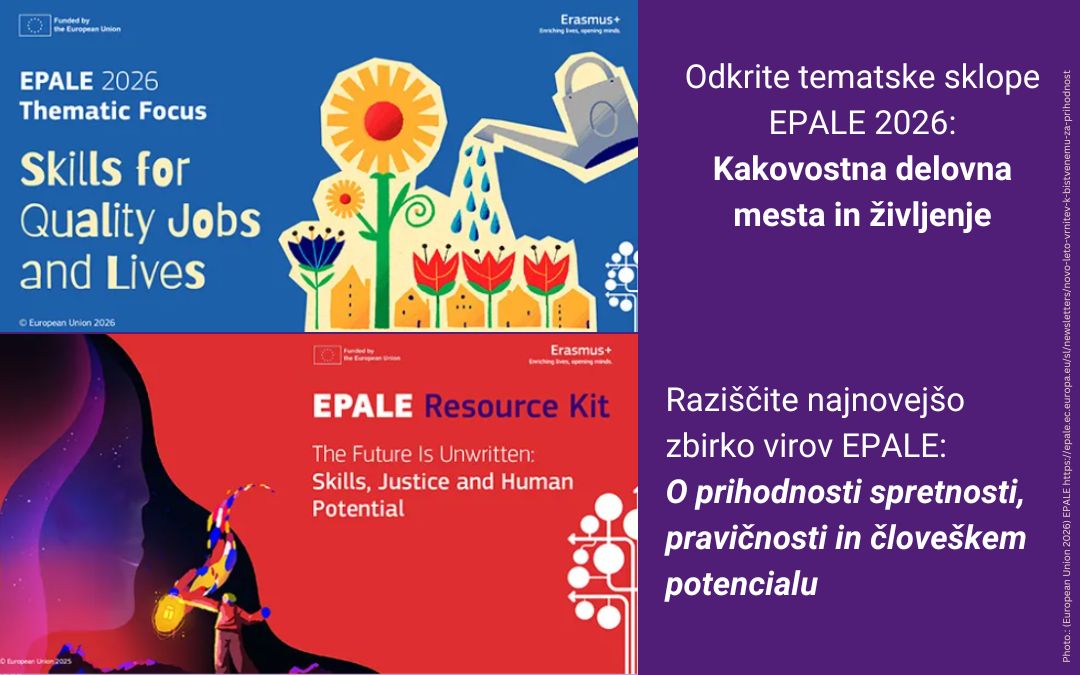
What makes adult learning truly transformative? EPALE’s 2026 thematic focus explores the essentials – from basic skills to vibrant learning communities.
What if Europe’s future depends on ensuring that everyone has the basic skills needed to navigate a complex world? This question underpins EPALE’s 2026 Thematic Focus: Skills for Quality Jobs and Lives.
Many adults in the EU still struggle with literacy, numeracy and digital skills, which limits their participation in everyday life and work. In response, 2026 promotes a broader understanding of basic skills, combining literacy, numeracy, digital competence, science and citizenship as essential for full participation in society.
Learning does not take place only in classrooms. Community spaces such as libraries, workplaces and cultural centres offer accessible and trusted environments where adults can rebuild confidence and re-engage with learning.
Four key areas
We invite contributions across four priority themes:
- Promoting basic skills as the foundation of lifelong learning
Highlighting how basic skills support broader competences such as financial literacy, critical thinking and resilience. - Developing and strengthening community learning environments
Showcasing inclusive, locally based learning spaces built through partnerships and flexible approaches. - Encouraging motivation and engagement in learning
Addressing barriers such as low confidence through learner-centred, interest-driven methods. - Professionalisation of adult educators
Emphasising the importance of skilled educators with pedagogical, digital and intercultural competences.
In a rapidly changing world, basic skills are not only about individual success but also about collective resilience. In 2026, EPALE will continue to share good practices, foster dialogue and support innovative approaches to adult learning.
Špela Močilnikar (spela.mocilnikar@cmepius.si), CMEPIUS