


Since September 2024, the Trebnje Center for Education and Culture has been participating in the international Interreg Alpine Space program as part of the APOLLO project, which involves ten partners from four Alpine regions—Slovenia, Italy, Austria, and Germany. In addition to CIK Trebnje, the Faculty of Organizational Studies (FOŠ) Novo mesto and the Municipality of Novo mesto are also participating in the project from Slovenia, enabling a comprehensive approach to the challenges of the modern working and living environment.
The APOLLO project aims to improve the well-being of the working population by establishing closer cooperation between public administrations, research institutions, companies, and other stakeholders in the field of territorial integration. Digitization plays a key role in this, as the project recognizes it as a means of promoting social innovation and introducing new solutions into public services and work processes.
Objectives and key content areas
The main objective of the project is to address the contemporary challenges faced by the working population, including:
- new needs in balancing work and private life (demographic changes, support for families, e-health),
- new working models such as teleworking and flexible working hours,
- innovative forms of territorial cooperation between businesses and public institutions,
- the impact of digitalization on human resource management and organizational processes.
Work done so far by Slovenian partners
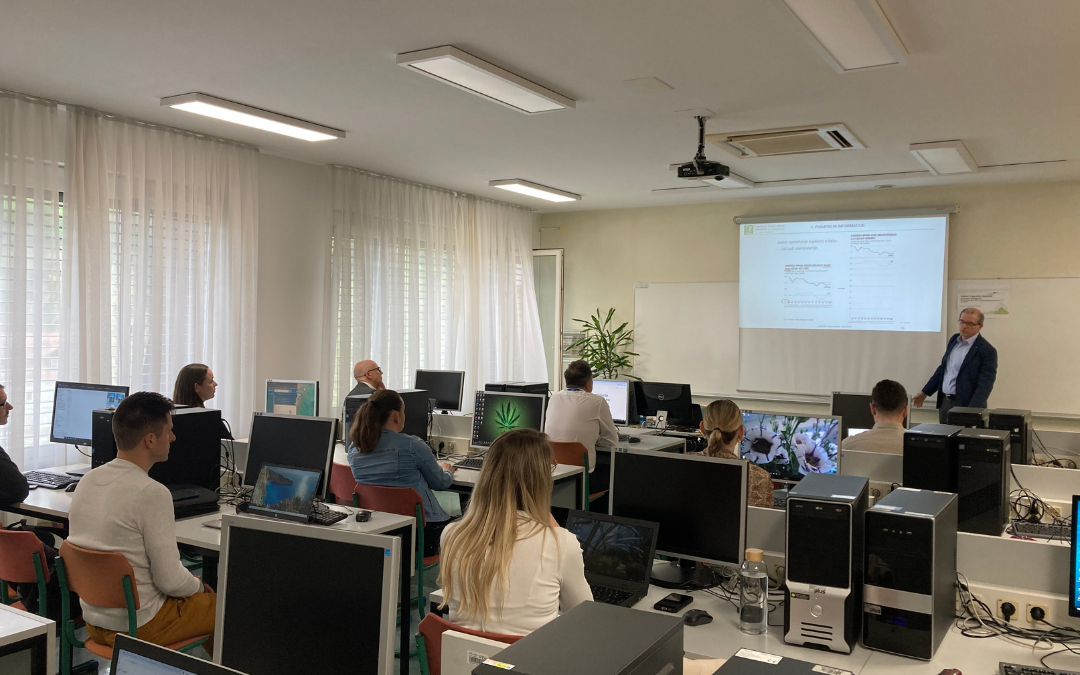
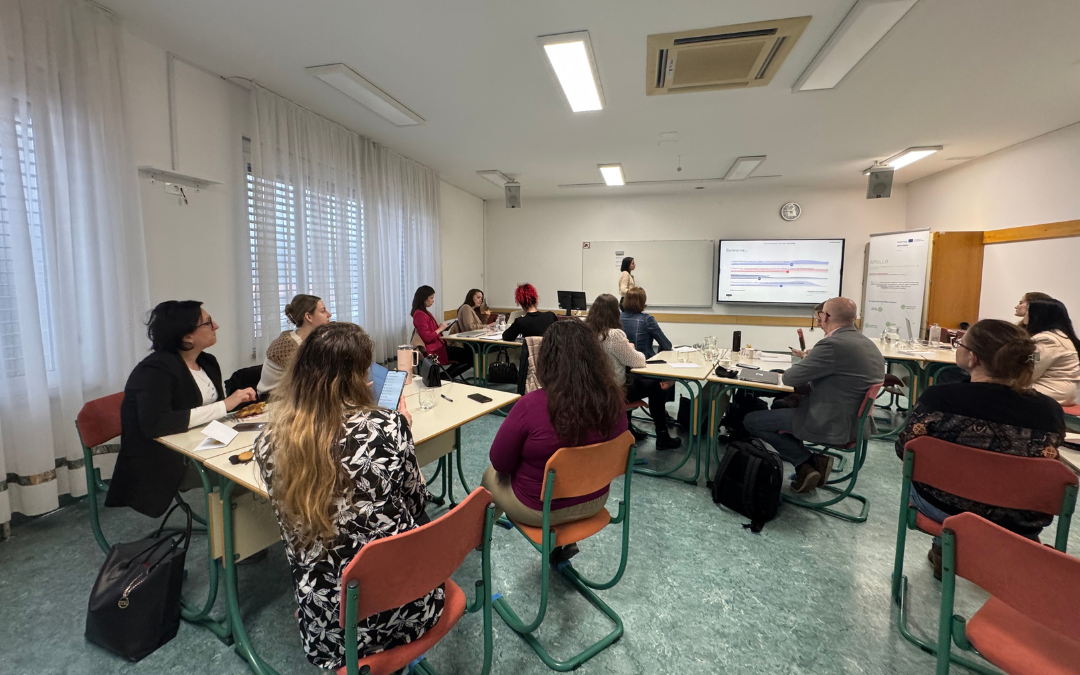
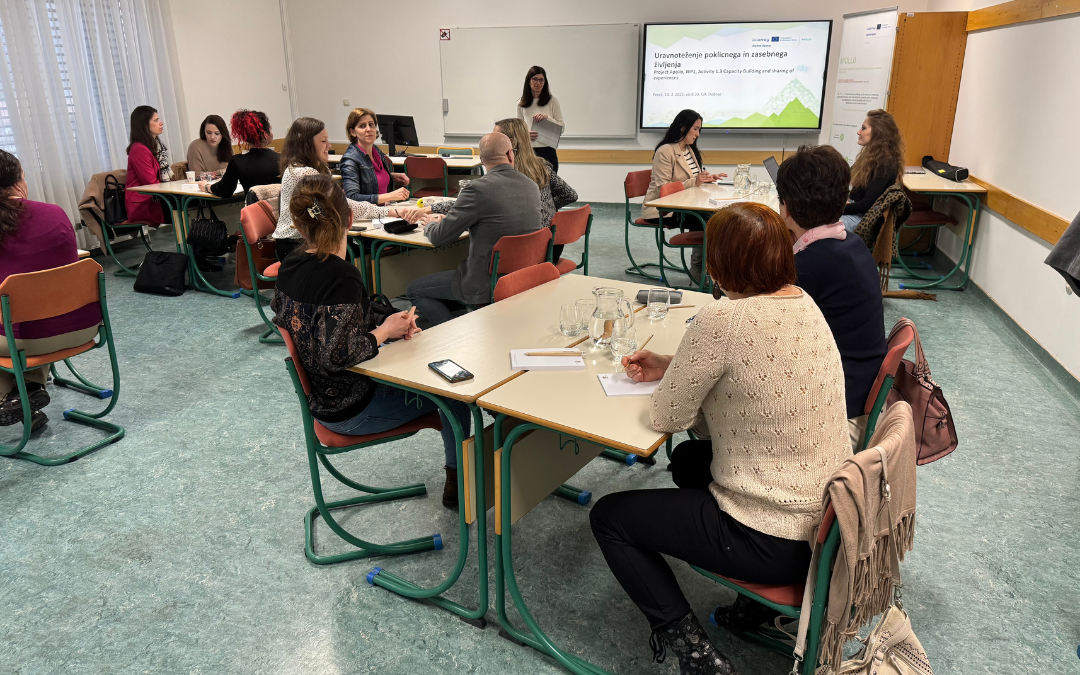
In the first phase of the project, partners in all participating countries held focus groups to gather information about the needs, challenges, and suggestions of local communities. In Slovenia, the focus group was held by the Municipality of Novo mesto, and the results served as the basis for designing the first educational activities. Based on the insights gained, CIK Trebnje, together with FOŠ Novo mesto, designed and conducted two professional training courses aimed at strengthening the soft and digital skills of employees and equipping them with knowledge that is increasingly crucial for the modern working environment.

The first training session addressed the balance between work and private life, with an emphasis on the challenges of burnout, the impact of digitalisation on working habits and the spread of new work models, such as hybrid work and the four-day working week. Lecturers Dr. Lejla Imamović Lerić, Ana Furlani, and Dr. Zinka Kosec presented the results of the APOLLO project to participants, discussing the importance of the right to disconnect and the role of well-being in employee productivity and satisfaction. The second training session was devoted to digitization and digital transformation, where participants learned how data, digital tools, and new services can improve decision-making, communication, and organizational management. Igor Makovec presented the practical aspects of business intelligence and data use, while Dr. Sabina Popit presented the Digital Service for Citizens as an example of good practice in digital solutions in public administration.
Current status and next steps
The APOLLO project has entered its second phase, which will be dedicated to pilot testing of solutions. In Slovenia, the pilot initiative will focus on developing digital tools that will simplify communication between citizens of the Municipality of Novo mesto and the municipal administration and improve access to public services.
In the coming months, partner organizations will continue to develop and test innovative approaches that will contribute to more effective, inclusive, and user-friendly support for residents.
At CIK Trebnje, we look forward to the next steps of the APOLLO project. We believe that through close international cooperation and the commitment of partner institutions, we will contribute to the creation of a modern, sustainable, and people-friendly working environment. The project is already laying important foundations for the development of innovative digital solutions that will contribute to the well-being of the population in the Alpine region.
Tanja Vrčkovnik Kravcar (tanja.vrckovnik.kravcar@ciktrebnje.si ), Centre for Education and Culture Trebnje